If you’ve scrolled through TikTok, opened a group chat, or read a comment section lately, chances are you’ve seen someone get called zesty. Maybe it made you laugh. Maybe it left you confused. Either way, you’re not alone — “what does zesty meaning” is one of the fastest-growing slang searches online right now.
Here’s the short answer: zesty has two lives. In the kitchen, it describes food with a bold, tangy, citrus-forward kick. Online, it describes a person, a post, or a moment that’s dramatic, expressive, confident, and a little over-the-top — in a good way, most of the time. Which meaning applies depends entirely on context, and by the end of this guide, you’ll know exactly how to read that context yourself.
We’ll walk through where the word came from, how it jumped from your dinner plate to your For You Page, what it means across different platforms, whether it’s actually a compliment, and how to use it (or avoid it) without putting your foot in it. Let’s get into it.
Key Takeaways
- Zesty literally means full of citrus-like flavor; as slang, it means bold, dramatic, expressive energy.
- The word comes from the French “zeste,” referring to citrus peel.
- Its slang meaning grew through meme culture and exploded via TikTok.
- Tone, relationship, and platform — not the word itself — decide whether “zesty” is a compliment or a tease.
- It is not a sexuality label, despite sometimes being misused that way.
- Close cousins include slay, extra, and flamboyant, each with a slightly different meaning.
- In professional settings, swap it for dynamic, vibrant, or enthusiastic.
Zesty — Quick Definition
Zesty (adjective) has two core meanings:
- Literal/culinary: Full of zest — tangy, spicy, or citrusy in flavor. Think a zesty vinaigrette or a zesty pasta sauce.
- Slang/personality: Bold, dramatic, flamboyant, or full of energy and confidence. Used to describe someone’s expressive style, an entertaining video, or an over-the-top moment.
In one sentence: zesty means “full of flavor” in the kitchen and “full of personality” online.
The Original Meaning of Zesty (Dictionary & Culinary Sense)
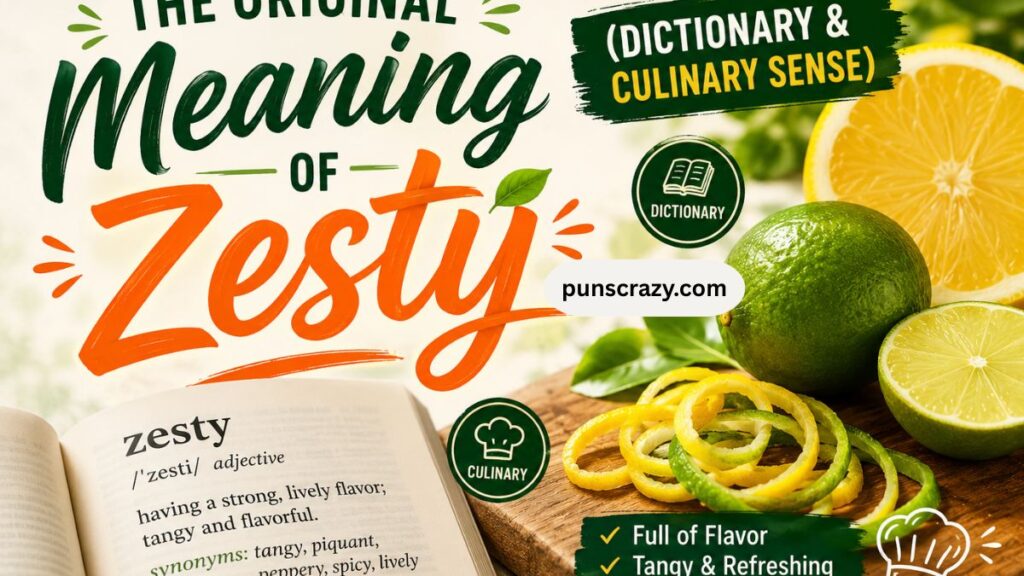
Before it was internet slang, zesty was — and still is — a completely ordinary word in cooking and everyday English. Understanding this original meaning actually makes the slang version easier to understand, because the two are more connected than they look.
Where “Zest” Comes From
The noun zest traces back to the French word “zeste,” which referred to the peel of a citrus fruit — specifically the outer, aromatic skin of an orange or lemon. That peel, or citrus peel, contains oils that pack an intense, fragrant punch, which is exactly why chefs still zest lemons and oranges over dishes today for a burst of flavor. Over time, English absorbed the word directly, and “zest” came to mean the citrus peel itself, the oil extracted from it, and eventually any quality that added sharp, exciting flavor to food.
How “Zesty” Is Used in Cooking Today
In modern culinary arts, calling something zesty is high praise. A zesty salad dressing is tangy and bright. A zesty marinade has a spicy, punchy kick. Food bloggers and food photography accounts use “zesty” constantly to describe dishes that are appetizing, bold, and anything but bland — think zesty pasta, zesty grilled chicken, or a zesty citrus glaze. If you search any recipe site, you’ll find “zesty” used as shorthand for “this dish has personality on the plate,” which is the exact same idea that later got applied to people.
Zesty as a Personality Descriptor Before the Internet
Here’s something most articles on this topic skip: zesty was already being used to describe people’s energy and enthusiasm long before TikTok existed. Older English dictionaries define “zesty” as “full of zest; keen, lively, or exciting,” and that sense has been in circulation for decades. A “zesty personality” in a 1990s magazine profile simply meant someone was energetic, spirited, and enthusiastic — a fairly ordinary compliment, not slang at all. This matters because it shows internet culture didn’t invent a new meaning out of nowhere; it took a dormant, general-audience meaning and gave it a much sharper, more specific edge.
How Zesty Became Internet Slang
The jump from “flavorful” to “viral personality descriptor” didn’t happen overnight. It moved through several distinct phases of internet culture, each one narrowing and sharpening the word’s meaning.
The Shift From Flavor to Personality (2000s–2010s)
As blogging and early social platforms grew, writers started reaching for figurative language to describe people the same way they’d describe food — colorful, bold, and impossible to ignore. “Zesty” fit naturally into that trend of borrowing culinary and sensory words (spicy, extra, savage, thirsty) to describe human behavior. This kind of metaphorical usage is common in language evolution: a concrete, sensory word gets stretched to cover abstract personality traits because it’s more vivid than a plain adjective like “energetic.”
Meme Culture’s Role in the Early Spread
By the mid-2010s, meme culture on Tumblr and Twitter had picked up “zesty” as a humorous label for bold, theatrical personalities. It showed up in GIFs, reaction posts, and captions describing exaggerated behavior — a dramatic wink, an over-the-top pose, a flamboyant outfit. This period cemented “zesty” as colloquial language rather than a formal descriptor, and it started attaching itself specifically to performance — the way someone moved, posed, or expressed themselves — rather than just general liveliness.
TikTok’s Breakout Moment
TikTok is where “zesty” went from niche internet vocabulary to mainstream social media language. Clips tagged with the word typically show bold fashion choices, exaggerated posing, high-energy dance moves, or theatrical reactions. Creators started using it constantly in captions and comments, often paired with other viral content slang like “slay” and “sus.” The Gen Z culture that TikTok amplifies tends to favor short, punchy, sensory words exactly like this one, which is a big part of why “zesty” spread so fast compared to more traditional slang.
Timeline: Zesty’s Meaning by Era
| Era | Dominant Meaning | Where It Was Used |
| Pre-2000s | Flavorful (culinary), occasionally “energetic” for people | Cookbooks, general English |
| Mid-2010s | Bold, theatrical personality (early slang) | Tumblr, Twitter, memes |
| 2020–2022 | Flamboyant, dramatic, expressive behavior | TikTok, Instagram Reels |
| 2023–2025 | Compliment or gentle tease, depending on tone | TikTok, Discord, texting |
| 2026 | Broad shorthand for bold, fun, high-energy content or people | TikTok, Discord, gaming chat |
What Does Zesty Mean in Slang Today?
At its core, the modern slang definition of zesty is this: bold, dramatic, expressive, or “extra” behavior, usually delivered with confidence and a bit of theatrical flair.
Core Definition — Bold, Dramatic, Flamboyant, Extra
When someone calls a person, a video, or a moment “zesty,” they’re pointing to a specific combination of traits: boldness, flair, charm, and unmistakable expressiveness. It’s less about being simply happy or upbeat, and more about being noticeably animated — the kind of energy that draws attention in a room or a comment section. A “zesty” dance move isn’t just energetic; it’s performed with exaggerated confidence. A “zesty” outfit isn’t just colorful; it’s worn with attitude.
Compliment vs. Tease — Tone Decides Everything
This is the single most important thing to understand about the word: zesty carries no fixed emotional charge on its own. The same sentence can be warm praise or a light jab depending on who’s saying it, to whom, and how.
- As a compliment: “Her fit is so zesty, I’m obsessed” — praising bold, confident style.
- As a tease: “Bro, you’re being so zesty right now 😭” — gently poking fun at someone being dramatic.
- As neutral description: “That was a zesty presentation” — noting expressive energy without judgment either way.
Expert tip: If you’re unsure how a “zesty” comment was meant, look at the emojis and punctuation around it. Supportive emojis (✨🔥💅) almost always signal celebration. A skeptical or laughing emoji (😭😂) usually signals gentle teasing rather than genuine praise or genuine insult.
Example Sentences People Actually Use
- “That TikTok was incredibly zesty, I watched it five times.”
- “Stop being so zesty in the group chat, I’m trying to focus.”
- “He’s serving zesty realness with that jacket.”
- “Your whole vibe today is zesty and I love it.”
Is “Zesty” About Sexuality? Clearing Up the Biggest Misconception
This is one of the most common — and most sensitive — questions people search alongside “zesty meaning,” so it deserves a direct, honest answer.
Why People Search “Does Zesty Mean Gay”
Because “zesty” is frequently used to describe flamboyant, expressive, or theatrical behavior in men specifically, some online commenters have started using it as a coded way to imply someone’s sexuality, often echoing older, harmful stereotypes about masculinity. That association has made its way into search behavior, with plenty of people typing “does zesty mean gay” directly into Google.
The Honest Answer
No — “zesty” is not a sexuality label, and it doesn’t mean gay. By definition, it describes a style of behavior — dramatic, bold, expressive — not a person’s identity or orientation. Anyone, regardless of gender or sexuality, can be described as zesty: a girl doing an exaggerated makeup tutorial, a pet with a big personality, a straight guy hyping up a dance challenge, or a meme with dramatic energy. The word is about how someone is acting, not who someone is.
Why the Stereotype Still Persists
Even though the word itself isn’t a sexuality term, using it to single out a specific person’s mannerisms — especially a man’s — can function as a coded insult when the intent behind it is mockery rather than description. That’s the real issue: not the word itself, but when it’s weaponized to label or ridicule someone’s identity or self-expression. The respectful rule of thumb is simple — describe behavior, don’t label identity.
Is Zesty Offensive? How to Read the Room
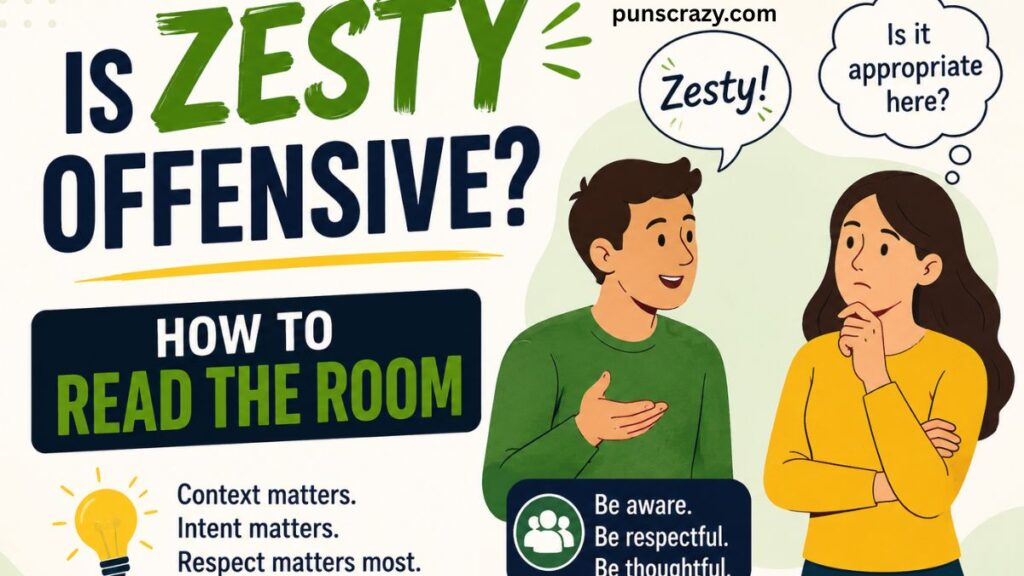
Whether “zesty” lands as fun or hurtful comes down to three factors working together, not any single one of them alone.
What Decides Tone
- Relationship — Said between close friends, it’s usually affectionate. Said by a stranger, it can read as mocking.
- Platform — A caption on your own TikTok is self-directed and safe. A comment on someone else’s public post carries more risk of sounding judgmental.
- Delivery — Paired with celebratory language and emojis, it reads as praise. Paired with sarcasm or mockery, it doesn’t.
When It Lands as a Compliment
Zesty works well as praise when it’s:
- Used about yourself (“feeling zesty today”)
- Used by a close friend about your energy or style
- Paired with clearly positive feedback and encouragement
When It Can Come Across as Mocking
It tends to backfire when it’s:
- Aimed at a stranger’s mannerisms or appearance
- Used to imply something about someone’s identity
- Delivered with an obviously sarcastic or dismissive tone
A Simple Gut-Check
Before calling someone else zesty, ask yourself: Am I praising their energy, or am I making fun of how they express themselves? If you’re not sure the person would laugh along with you, it’s safer to skip the label altogether.
How to Use “Zesty” Correctly (With Examples)
Once you understand the tone rules, using “zesty” well becomes second nature. Here’s how it shows up across different real-world situations.
Zesty About a Person’s Energy or Style
Use it to celebrate confidence, charm, and standout personality traits — a bold outfit, a magnetic presence, an unapologetically expressive attitude.
Zesty About Content, Outfits, Dances, or Performances
This is the most common social media use case. A “zesty” dance edit, a “zesty” comedic skit, or a “zesty” fashion reveal all point to the same thing: entertaining, high-energy, theatrical content.
Zesty in Texting and DMs
In online chats, “zesty” often describes how someone is communicating — lots of emojis, exaggerated reactions, dramatic punctuation. “You’re being zesty in this chat” is a lighthearted nudge, not usually a serious criticism.
Real Example Captions, Explained
| Example | What It Actually Means |
| “Love your zesty attitude today” | Genuine compliment on confident, upbeat energy |
| “That’s giving zesty energy” | Acknowledging someone’s bold, standout presence |
| “Stop being so zesty in the group chat” | Playful tease about being extra or dramatic |
| “He’s serving zesty realness” | Celebrating authentic, confident self-expression |
| “That joke had zesty delivery” | Praising confident, expressive comic timing |
Zesty vs. Similar Slang Terms
“Zesty” doesn’t exist in isolation — it’s part of a whole family of modern vocabulary that Gen Z uses to describe personality and content. Knowing the differences helps you pick the right word for the right moment.
| Term | Core Meaning | Typical Tone | Best Used For |
| Zesty | Bold, dramatic, expressive energy | Playful, can be a tease | Personality, style, performance |
| Slay | Doing something excellently, with confidence | Almost always positive | Praising an achievement or look |
| Sus | Suspicious or questionable | Neutral to negative | Doubting someone’s intentions |
| Extra | Doing too much, over-the-top | Can be positive or critical | Excessive or dramatic behavior |
| Flamboyant | Elaborately styled, showy | Neutral, more formal | Describing style or presentation |
Zesty vs. Slay
Slay is pure celebration — it means someone did something impressively well. Zesty is more about how they did it: with flair, drama, and confidence. You can slay and be zesty at the same time, but they’re not interchangeable.
Zesty vs. Sus
These two sit at opposite emotional poles. Sus signals doubt or suspicion, while zesty signals expressive energy. The only overlap is that both are short, punchy slang terms that spread through the same online spaces.
Zesty vs. Extra
Of everything on this list, “extra” is the closest cousin to “zesty.” Both describe over-the-top behavior. The difference is subtle: extra focuses on the amount of effort or drama, while zesty focuses on the style — the confidence and flair behind it.
Zesty vs. Flamboyant
Flamboyant is the more formal, dictionary-standard word for elaborate, showy self-expression. Zesty, by contrast, is casual, meme-driven, and carries a layer of playful internet humor that “flamboyant” doesn’t.
Formal & Casual Alternatives to “Zesty”
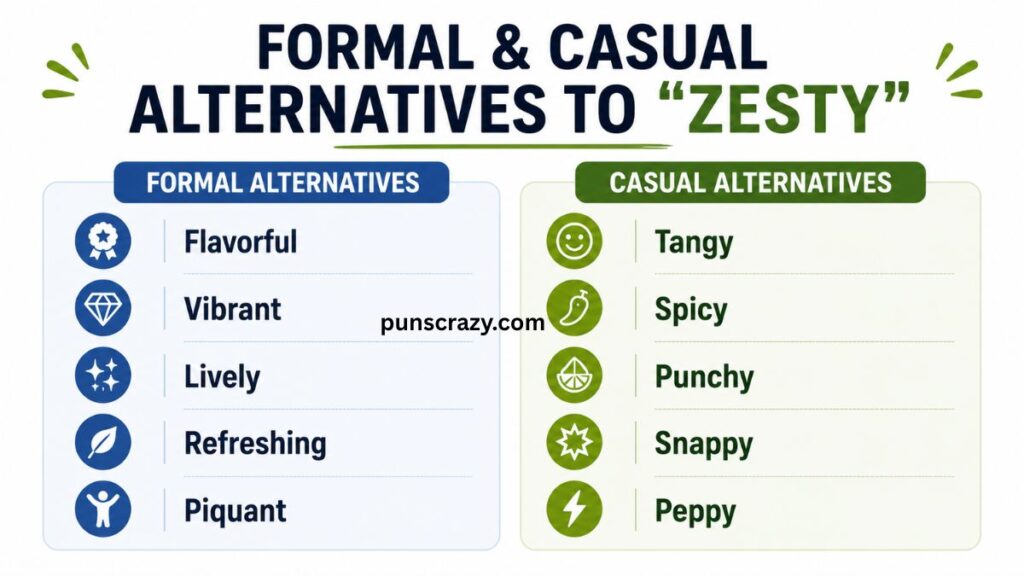
Because “zesty” is heavily tied to Gen Z culture, it doesn’t always fit every setting. Here are solid substitutes depending on the room you’re in.
Workplace-Safe Synonyms
- Vibrant
- Dynamic
- Enthusiastic
- Animated
- Spirited
These work well in professional communication, a business pitch, or team collaboration settings where you want to praise someone’s energy without sounding like you’re texting a friend.
Casual, Friend-Group Synonyms
- Spicy
- Peppy
- Lively
- Cheerful
- Charismatic
When a Synonym Is the Smarter Choice
If you’re writing a presentation, describing a colleague’s creative thinking in a review, or talking to someone outside your usual online circles, reach for “dynamic” or “enthusiastic” instead of “zesty.” The meaning carries over cleanly, but the tone feels appropriate for a workplace engagement context rather than a TikTok comment section.
Who Uses “Zesty” and Where
Gen Z vs. Gen Alpha
Gen Z tends to use “zesty” ironically or as playful teasing between friends, layered with humor and self-awareness. And Gen Alpha, the generation growing up entirely inside short-form video, tends to use it more literally — simply to mean “acting dramatic” or “extra,” without as much of the winking irony older users bring to it.
TikTok, Discord, and Gaming Chat
- TikTok: Captions, hashtags, and comment threads hyping up bold content
- Discord: Reacting to messages or memes, often with emoji combos like 🔥✨
- Gaming chat: Describing an over-the-top play, a dramatic in-game moment, or a streamer’s exaggerated reaction
Can Adults or Brands Use It Without Sounding Forced?
Technically, yes — but it takes a light touch. A brand’s social media account can use “zesty” naturally in a content creation context (especially food and lifestyle brands, where the word already fits both meanings). Used sparingly and in the right context, it reads as fluent; used constantly or forced into every caption, it reads as a brand trying too hard to sound young.
Zesty’s Popularity Over Time
Search and usage data around “zesty” slang show a clear growth curve. The term moved from a niche meme-culture reference around 2015–2018, into steady TikTok-driven growth from 2020–2023, and into broad, everyday Gen Z vocabulary by 2024–2026. It’s now firmly embedded across TikTok, Discord, and gaming communities rather than being tied to a single viral moment or trend cycle.
Is It Still Growing, Peaking, or Fading in 2026?
As of 2026, “zesty” remains an active, frequently used term across TikTok, Discord, and gaming chat, rather than a fading trend. Words that reach this level of everyday, cross-platform use — the way “sus” and “extra” did before it — tend to have longer shelf lives than typical one-off viral phrases, because they’ve become genuinely useful shorthand rather than a passing joke.
Common Mistakes People Make With “Zesty”
- Using it to label someone’s identity. “Zesty” describes behavior, not sexuality or who someone is — using it that way can come across as coded mockery.
- Aiming it at strangers. What reads as affectionate teasing between friends can feel like public ridicule when said to someone you don’t know.
- Assuming it’s always a compliment. Context and delivery matter more than the word itself.
- Overusing it in professional settings. It can undercut credibility in a formal business pitch or workplace presentation.
- Mixing it up with “sus.” They mean opposite things — one is expressive energy, the other is suspicion.
Frequently Asked Questions About Zesty Meaning
What does zesty mean for a girl?
For a girl, “zesty” usually describes bold, confident, expressive style or energy — think standout fashion choices, playful humor, or an animated personality. It’s typically used as a compliment.
What does zesty mean for a guy?
For a guy, “zesty” describes dramatic, flamboyant, or highly expressive behavior — exaggerated gestures, theatrical posing, or bold self-expression. It can be a genuine compliment or a light tease, and it is not a comment on sexuality.
Is zesty a compliment or an insult?
It can be either, depending entirely on tone, relationship, and platform. Among friends, it’s usually playful praise. From a stranger or with a mocking tone, it can feel like an insult.
Does zesty mean gay?
No. “Zesty” describes a style of behavior — bold and expressive — not a person’s sexual orientation. Using it as a coded sexuality label misrepresents the word and can reinforce harmful stereotypes.
What’s the difference between zesty and sassy?
Sassy implies a bit of attitude or backtalk, often with confidence bordering on cheekiness. Zesty is broader, covering overall bold, dramatic, high-energy expression, not just a sharp-tongued attitude.
Is “zesty” still used in 2026?
Yes. As of 2026, it remains active in TikTok captions, Discord chats, and gaming communities, and shows no clear signs of fading from everyday online communication.
Conclusion
At the end of the day, zesty meaning boils down to two connected ideas: full of flavor in the kitchen, and full of personality online. The internet didn’t reinvent the word so much as borrow its energy — the same boldness that makes a citrus glaze exciting is exactly what makes a “zesty” TikTok moment or a “zesty” outfit stand out. The one thing to hold onto is that context and tone decide everything. Used with warmth, “zesty” celebrates confidence and self-expression. Used carelessly, it can slide into mockery. Now that you know the difference, you’re equipped to use it — or spot it — correctly wherever you see it next.
Read more:
GTS Meaning in Text: What It Really Means in 2026 (Clear & Simple Guide)
SMH Meaning: What Does It Really Stand For? (2026 Complete Guide)
FAFO Meaning: What It Means, How People Use It & Why It Matters Online 2026

Will Jack is the creative mind behind Punscrazy, a humor-focused platform dedicated to clever wordplay and lighthearted entertainment. With a passion for puns and witty expressions, he curates and creates engaging content that brings smiles to readers around the world. His work blends creativity with simplicity, making humor accessible for everyday moments, social media captions, and casual fun.