You’re mid-conversation. Someone fires off a message, ends it with “YFM?” YFM Meaning in Text— and suddenly you’re staring at your screen, wondering if you missed something. Don’t stress. You’re not alone, and you’re about to understand exactly what it means, where it came from, and how to use it without looking out of touch.
This guide covers every angle of yfm meaning in text — from its core definition and cultural roots to how it shifts across platforms, tones, and situations. By the end, you’ll know it cold.
What Does “YFM” Mean in Text?
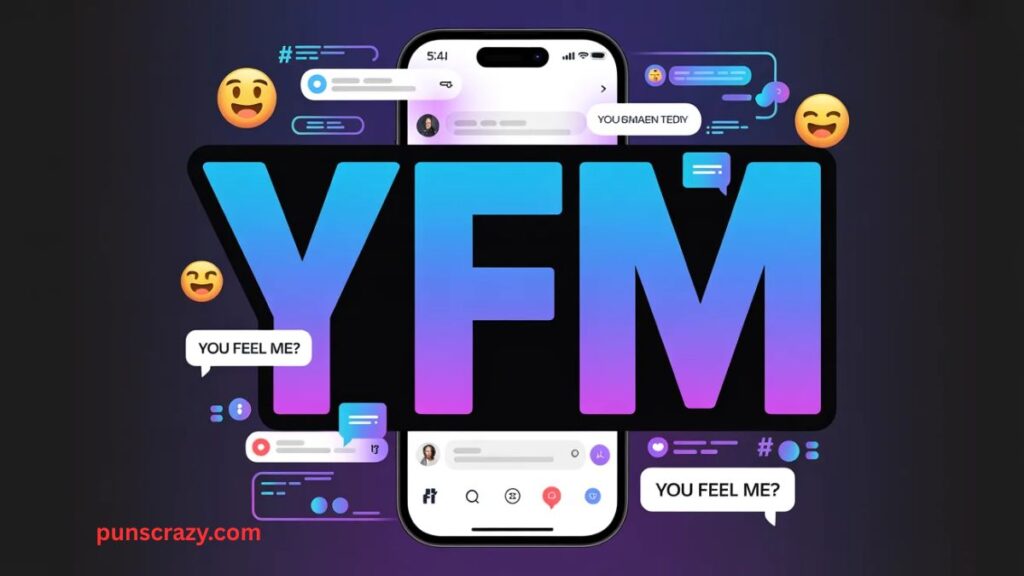
YFM stands for “You Feel Me?”
That’s the dominant meaning across online conversations, texting, and social media chats. It’s the digital shorthand for asking, “Do you understand what I’m saying? Are you with me on this?”
Quick Reference: YFM = “You Feel Me?” — a request for emotional or intellectual agreement.
It functions almost exactly like “get what I mean” or “right?” at the end of a sentence. You make a point, then drop “YFM?” to check that the other person is tracking with you — not just logically, but emotionally.
Think of it as a vibe check wrapped in three letters.
The Full Breakdown — Every Meaning of “YFM” Explained
Here’s where things get interesting. Most people assume YFM has one meaning. It doesn’t. Context is the whole game with chat slang like this.
“You Feel Me?” — The Dominant Meaning
This is the one you’ll see 80% of the time. Someone’s making a point — venting about work, explaining a decision, sharing an opinion — and they close with “YFM?” It’s not a literal question. It’s a social signal that says: I want you to connect with what I just said.
Example text exchange:
Alex: “I’ve been working nonstop for three weeks and I still feel behind. It’s like no matter how much I do, it’s never enough. YFM?” Jordan: “100%, that’s exhausting.”
See how “YFM?” isn’t asking for facts? It’s asking for empathy. That’s the emotional bond function — and it’s the heart of why this abbreviation resonates so widely in casual texting.
“You Freaking Me Out” — The Alternate Reading
Less common but genuinely used. When someone shares alarming news and gets a nervous reply, “YFM” can stand for “You Freaking Me Out.” Context here is everything.
Example:
Sam: “I think there’s someone outside my window.” Chris: “YFM right now, text me back immediately.”
The surrounding words make it obvious. If you’re unsure which meaning applies, look at the emotional temperature of the conversation.
“Your Fault, Man” — Niche but Real
This one lives mostly in gaming conversations and banter-heavy friend groups. After a team wipeout or a bad play, someone drops “YFM” as a quick, accusatory shorthand.
Example from a Discord gaming session:
Player 1: “We just lost the match.” Player 2: “YFM, you rushed in alone.”
It’s playful and rarely serious — but knowing this meaning keeps you from misreading the room entirely.
Emotional Vibe Check or Agreement Seeker
Sometimes “YFM?” isn’t a question at all. It’s a rhetorical closer — the texting equivalent of trailing off and looking at someone expectantly. This version appears after strong opinions, mini-rants, or personal shares.
It’s doing the same work as “do you understand” or “agree with me” — but with much less formality.
Platform-Specific and Regional Variations
Gen z slang drifts. The same abbreviation can carry slightly different energy on TikTok versus Discord versus iMessage. On TikTok, “YFM” in a comment often functions as pure affirmation — “I see you, I get it.” On Discord, it might literally mean “Your Fault, Man.” This kind of slang evolution is completely normal in digital language.
YFM Meanings at a Glance
| Meaning | Context | Tone |
| You Feel Me? | General texting, social media | Neutral / Friendly |
| You Freaking Me Out | Alarming news, surprise | Anxious / Urgent |
| Your Fault, Man | Gaming, banter | Playful / Accusatory |
| Vibe / Agreement Check | Rants, opinions, storytelling | Casual / Rhetorical |
Where Did “YFM” Come From? Origins and Cultural Roots
Your competitor skipped this. Big mistake — because understanding origin stops people from misusing or disrespecting a term.
“You Feel Me?” didn’t start in a text thread. It started in speech — specifically in African American Vernacular English (AAVE) and West Coast hip-hop culture in the late 1990s and early 2000s. Artists and communities used it as a conversational bridge: I’m sharing something real with you. Are you receiving it?
It wasn’t just asking for comprehension. It was asking for connection.
From there, it followed the natural pipeline that almost all slang evolution follows:
- Spoken word in community settings
- Rap lyrics and music — mainstream exposure
- Early SMS texting — compressed into abbreviation form
- Social media — spread beyond its original community
- Mainstream texting culture — adopted broadly across demographics
By the 2010s, the internet slang explosion had formalized abbreviations at an unprecedented pace. YFM was one of dozens that made the jump from subculture to mainstream digital chats during this period.
Understanding this history matters. It’s not just trivia — it helps you use the term with respect and accuracy.
How “YFM” Works Across Different Platforms in 2026
The core meaning stays stable. But how YFM lands shifts depending on the platform. Here’s your platform-by-platform breakdown.
Texting and iMessage — The Natural Habitat
This is where YFM lives most comfortably. In everyday texting, it typically appears at the end of a message — after someone makes a point, shares something personal, or explains a decision. It flows naturally in back-and-forth casual messaging between people who already have rapport.
Example:
“I don’t think he’s being honest with us and it’s starting to affect the whole group dynamic, YFM?”
Instagram and Snapchat — Visual Context Changes Everything
On instagram comments and snapchat messages, YFM often pairs with emoji to soften or amplify its meaning. The visual layer of these platforms adds context that pure text doesn’t have.
- 💯 + YFM = strong agreement or validation
- 😤 + YFM = frustrated but relatable energy
- 🤝 + YFM = “we’re on the same page”
In social media talks, abbreviations like this work faster than full sentences — and that speed is the point.
TikTok Comments — Affirmation and Irony
TikTok’s comment culture runs on speed and humor. “YFM” in a comment thread usually functions as solidarity — “I feel this deeply.” But gen z texting also uses it ironically, in a self-deprecating way that signals in-group humor rather than sincere agreement.
Sincere use: “She really said what needed to be said, YFM 💀” Ironic use: “I ate cereal for dinner again, YFM? 💀”
The skull emoji after “YFM” is a reliable irony marker in youth texting spaces.
Discord and Gaming — Fast, Functional, Sometimes Accusatory
Gamer chats run on speed. Nobody has time to type full sentences mid-raid. In online gaming environments and esports slang, YFM pops up in two main ways:
- “Are we aligned?” — Quick team check before a move
- “Your Fault, Man” — Post-loss blame, almost always lighthearted
In quick comms and match talk, the abbreviation earns its place purely through efficiency.
Twitter/X and Reddit — Hot Takes and Solidarity
On Twitter/X, YFM punctuates opinions and hot takes. It’s the closer that signals: I said what I said, and I want you to be with me on this. On Reddit, the full phrase “you feel me” appears more often than the abbreviation — Reddit’s culture leans slightly more verbose.
Dating Apps — Proceed With Awareness
On dating platforms like Tinder, Hinge, or Bumble, “YFM?” carries an undeniably intimate undertone. The phrase “feel me” is physically evocative — even if the intent is entirely casual. In romantic chats, it can read as connection building and compatibility check energy, which isn’t always bad. But in a first message? It might come across as overly familiar.
Use it once you’ve built some back-and-forth. In flirty messages between people who already have chemistry, it lands warm. Cold-open with it and it might land weird.
Is “YFM” Rude, Flirty, or Just Casual? Decoding the Tone
The same three letters can land five completely different ways. Tone is 100% context-dependent — here’s how to read it.
When It’s Casual and Neutral
Most of the time, YFM is just conversational filler. No agenda. It’s the texting version of a verbal pause — “…you know?” No subtext, no emotion beyond wanting to be understood. This is its most common use in informal texting and relaxed conversations.
When It’s Warm and Friendly
Between close friends, “YFM?” functions almost like a term of endearment. It signals comfort and familiarity. You don’t say it to strangers — you say it to people you trust. This is the friendly messaging version, and it’s genuinely sweet.
When It Reads as Flirty
“Feel me” is an intimate phrase. In romantic chats and flirty messages, it implies a desire to be deeply understood by the other person — not just heard. On dating apps especially, this version of YFM carries warmth and connection building energy. Read the conversation history before using it this way.
When It Sounds Confrontational
This is the version people miss. Drop “YFM?” after a warning or a complaint, and it transforms entirely.
Example:
“I said don’t share that with anyone. Don’t do it again. YFM?”
That’s not a vibe check. That’s a boundary being set — firmly. The tone shift is real and it matters. In professional settings, this version would be wildly inappropriate.
The Ironic and Meme Version
Gen z slang runs on irony. The deadpan, self-deprecating use of YFM — usually paired with 💀 — is its own distinct flavor. It’s not sincere. It’s performative relatability, and it’s extremely common in online comments and social posts.
How to Respond to “YFM”
The right reply depends entirely on what the conversation was about. Here’s your toolkit.
When You Agree — Match Their Energy
- “100%”
- “Fr fr, exactly”
- “Absolutely, that tracks”
- “No cap, same”
Keep it brief. These quick replies signal alignment without over-explaining.
When You Don’t Understand — Say So Without Awkwardness
Normalizing “I don’t get it” is underrated. Try:
- “Wait, can you break that down more?”
- “Not gonna lie, I’m lost — what do you mean?”
- “Run that back for me?”
Honest quick texts beat fake agreement every time.
Funny or Playful Replies
- “Bro I feel you from two time zones away”
- “YFM? I don’t even feel myself right now 😭”
- “Felt that in my bones and my WiFi signal”
These work best in non formal talk and relaxed slang exchanges with people who know your humor.
When the Context Is Serious
If someone uses YFM after something vulnerable — a confession, a hard day, a real struggle — don’t brush past it with “lol” or “same.” Respond to the feeling:
- “Yeah, I hear you. That sounds genuinely exhausting.”
- “That makes total sense. You okay?”
Emotional bond moments deserve emotional responses.
In Semi-Professional Contexts
If YFM sneaks into a casual work Slack and you need to respond without being stiff, try:
- “Got it, makes sense”
- “Yep, fully understand”
- “Clear on my end”
You acknowledge the vibe without diving deep into casual messages territory.
Common Mistakes People Make With “YFM”
Even in modern chats, people trip over this one. Here are the most common errors.
Mistaking It for a Different Acronym
YFM vs. YFMS vs. YFW — they look similar and mean entirely different things. When you’re unsure which one applies, look at the surrounding words. The sentence before “YFM?” almost always tells you which meaning is in play.
Other abbreviations that cause confusion:
| Acronym | Meaning | Often Confused With YFM |
| YFW | You Feel When | When context is missing |
| YFMS | You Feel Me Son | Slightly more emphatic version |
| NGL | Not Gonna Lie | Different but similar casual function |
| IYKYK | If You Know You Know | Both signal insider understanding |
Using It in the Wrong Setting
Slipping “YFM?” into formal emails or business messaging when you meant to sound relatable is one of the fastest ways to undermine your professional tone. Corporate language and chat slang don’t mix well — especially in writing, where there’s no vocal tone to soften it.
Missing the Emotional Weight
When someone uses YFM after something vulnerable, they’re not being rhetorical. They genuinely want to know you’re with them. Responding with “lol” to that kind of message breaks the emotional bond they were reaching for.
Assuming It’s Always Sincere
Sometimes it’s ironic. Sometimes it’s meme energy. Read the emoji, read the topic, read the tone. Digital language without body language demands more interpretive effort than people realize.
Slang Terms in the Same Family as “YFM”
If you’re navigating gen z slang and texting culture, these related abbreviations and texting acronyms belong in your vocabulary too.
| Slang | Full Meaning | Used Like |
| IYKYK | If You Know You Know | Exclusive insider reference |
| NGL | Not Gonna Lie | Prefaces a blunt opinion |
| FR / FR FR | For Real | Emphasis or agreement |
| IGHT | Alright | Casual acknowledgment |
| SMH | Shaking My Head | Disappointment or disbelief |
| TBH | To Be Honest | Softens a direct statement |
| ISTG | I Swear to God | Emphasis or frustration |
| Lowkey | Subtly or quietly | Qualifier for a muted emotion |
| Highkey | Intensely or openly | Qualifier for a strong emotion |
| IKR | I Know Right | Agreement or validation |
| RN | Right Now | Urgency or immediacy |
These chat synonyms and messaging shortcuts all follow the same logic as YFM — compress a common phrase into something faster to type. That’s the whole architecture of youth texting in virtual discussions.
When You Should (And Shouldn’t) Use “YFM”
Green Light Situations
- Texting close friends in casual messaging threads
- DMs with people your own age or digital circle
- After making a strong point you want validated
- Gamer chats and online gaming comms with your crew
- Instagram comments where you’re affirming someone’s post
- Snapchat messages in existing close relationships
Red Light Situations
Avoid YFM entirely when:
- Writing formal emails to clients or supervisors
- Submitting academic work or official documents
- First messages to strangers — especially on dating platforms
- Discussing grief, serious illness, or mental health (the tone mismatch is jarring)
- Any context where corporate language is expected
Yellow Light — Proceed With Awareness
These situations require judgment:
- Semi-casual work chats — some startup Slacks are fine with it, others aren’t
- Cross-cultural online communication — AAVE-derived slang doesn’t always translate and deserves respectful awareness
- Conversations with older family members or acquaintances who might misread it entirely
The rule of thumb: if you’d hesitate to say it out loud in that setting, don’t type it either.
FAQs
What does YFM mean in texting?
YFM most commonly means “You Feel Me?” in texting — a casual, conversational way of asking if someone understands or agrees with what you just said. It functions like “right?” or “get what I mean?” at the end of a message.
Is YFM slang or a standard abbreviation?
It’s informal slang — not recognized in formal dictionaries as a standard abbreviation. It belongs to casual messaging culture, not business messaging or academic writing.
Where did “YFM” originate?
“You Feel Me?” has roots in AAVE (African American Vernacular English) and West Coast hip-hop culture from the late 1990s and early 2000s. It migrated into mainstream texting culture through music and the rise of SMS and social media.
Is “YFM” positive, negative, or neutral?
All three — depending entirely on context. In most cases it’s neutral to friendly. After a complaint or warning, it can sound confrontational. In a meme context, it’s often ironic. Online communication demands you read the full message, not just the acronym.
What does YFM mean on Snapchat or Instagram?
On Snapchat messages and Instagram comments, it carries the same core meaning — “You Feel Me?” — but it’s often more casual and emoji-paired. The visual platform adds tonal context that pure text doesn’t have.
Is “YFM” still used in 2026?
Yes, actively. It’s a staple of gen z texting and casual texting culture and shows no signs of fading. Like most durable slang, it’s evolved slightly — gaining ironic and meme uses alongside its sincere original function.
What should I reply when someone says YFM?
Match the tone. If they’re venting: validate them. If they’re joking: match the humor. But if you’re confused: say so. The worst reply is a generic “lol” to something sincere. Check the tone guide above for quick replies by context.
Can “YFM” mean something rude?
Yes. When used after a warning or command — “Don’t do that again, YFM?” — it carries a confrontational edge. In professional settings this would land badly. Tone and context are everything.
Does YFM mean different things on different platforms?
Slightly. The “Your Fault, Man” reading is most common in gaming conversations and esports slang. Everywhere else, “You Feel Me?” dominates. And on TikTok, you’ll often see it used ironically in social media talks where sincerity would be too earnest.
Final Thoughts
Here’s the truth about yfm meaning in text: the abbreviation is simple. The application of it isn’t. Three letters can carry warmth, confrontation, irony, or genuine vulnerability — and the difference lives entirely in context.
That’s not a flaw in modern chats. That’s how language actually works. Slang is a living system. It grows, shifts, borrows from culture, and adapts to new platforms. YFM is a perfect little case study in how slang evolution happens in real time — from AAVE speech to hip-hop lyrics to your iMessage thread.
The smartest approach isn’t memorizing every possible meaning. It’s learning to read the room. Who’s talking? What platform? What’s the emotional temperature of the conversation? Once you’ve got those answers, the right interpretation follows naturally.

Will Jack is the creative mind behind Punscrazy, a humor-focused platform dedicated to clever wordplay and lighthearted entertainment. With a passion for puns and witty expressions, he curates and creates engaging content that brings smiles to readers around the world. His work blends creativity with simplicity, making humor accessible for everyday moments, social media captions, and casual fun.