If you’ve seen the phrase “snow bunny” pop up on TikTok, in a dating app bio, or in a song lyric and wondered what it actually means, you’re not alone. The snow bunny meaning isn’t one single thing — it’s actually two distinct slang terms that happen to share the same words. One comes from ski culture. The other comes from Black slang and hip-hop. Mixing them up is the easiest way to misread a comment, a caption, or a conversation.
In this guide, you’ll learn exactly where snow bunny slang comes from, what it means in each context, how to tell which meaning someone intends, and how to respond if someone calls you one. We’ll also cover how the term shows up on Instagram, TikTok, and dating apps, plus the related slang terms people confuse it with.
What Does “Snow Bunny” Mean?
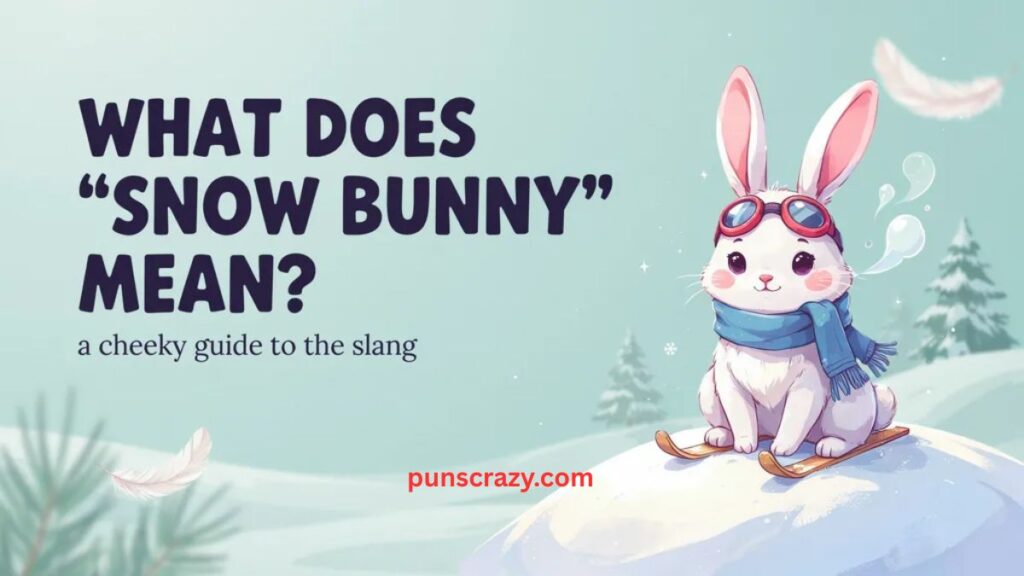
Snow bunny has two main meanings. The original meaning, dating to the 1950s, describes a young woman who enjoys skiing, snowboarding, or hanging around ski resorts — often more for the social scene than the sport itself. The second meaning, which developed decades later in Black slang and hip-hop culture, refers to a white woman who is romantically involved with or attracted to Black men.
Both meanings are still in active use today. Context is everything: a ski Instagram caption and a dating app bio are using two different dictionaries.
Where the Term Comes From: A Two-Track Origin
Understanding the snow bunny definition requires understanding that this isn’t one term that drifted in meaning — it’s closer to two separate slang traditions that happen to use identical wording.
The Original Meaning — 1950s Ski Culture
The phrase first appears in American slang around the 1950s, alongside the postwar boom in recreational skiing and snowboarding culture. According to Dictionary.com’s slang archive, the term originally described a novice female skier — someone who spent more time in the lodge, the lift line, or the après-ski social scene than actually skiing well. By the 1960s and 70s, the meaning had broadened to describe any attractive young woman associated with ski resorts and mountain resort life, regardless of skill level.
This is the wholesome, original sense of the term. Think:
- Fuzzy earmuffs and oversized sweaters
- Hot cocoa by the lodge fireplace
- A weekend at a ski destination like Aspen, Whistler, or the European Alps
- Someone who loves the winter lifestyle more than the sport itself
The Second Meaning — Black Slang & Hip-Hop (1990s–2000s)
A second, completely different meaning emerged later, primarily within African American Vernacular English (AAVE) and hip-hop culture during the 1990s and 2000s. In this context, “snow” doesn’t refer to weather — it’s a metaphor for whiteness, and “bunny” carries its long-standing slang meaning of “attractive woman.” Put together, the phrase became shorthand for a white woman in a relationship with, or attracted to, a Black man.
Rappers including Gucci Mane, Lil Wayne, and Kodak Black have used the term in lyrics referring to white romantic partners, which helped cement it in mainstream internet slang and pop culture. This usage isn’t inherently insulting — it’s often purely descriptive — but it does carry cultural baggage tied to assumptions about interracial dating, and some people use it as a stereotype rather than a neutral label.
Key takeaway: The ski-culture meaning and the dating-culture meaning developed independently, decades apart, in completely different communities. They are not the same slang term wearing different outfits — they’re two different terms that collided.
How “Snow” and “Bunny” Each Got Their Meaning
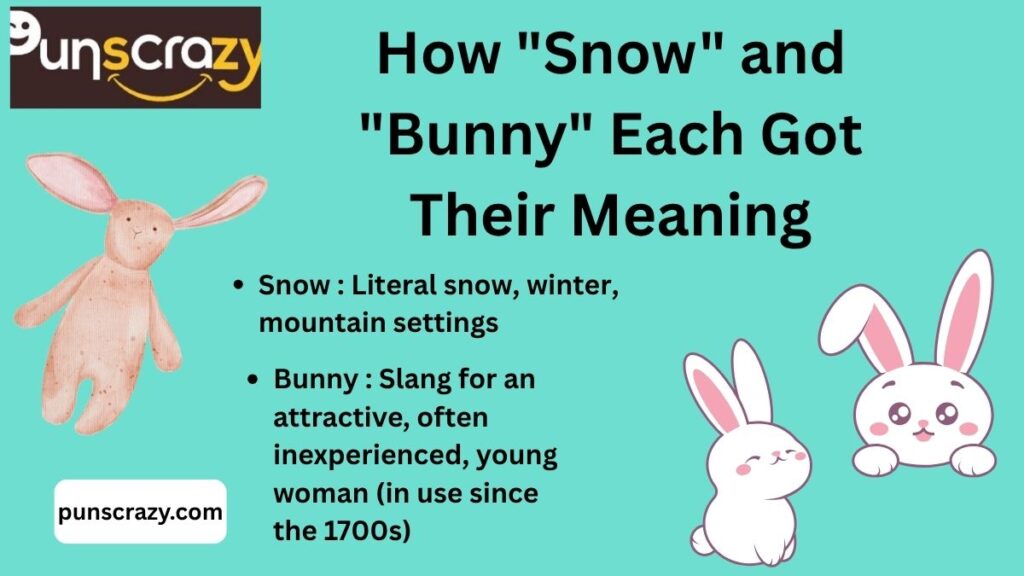
Breaking down the two halves of the phrase makes the snow bunny meaning much easier to remember:
| Word | Ski-Culture Meaning | Dating-Slang Meaning |
| Snow | Literal snow, winter, mountain settings | Metaphor for whiteness/white skin |
| Bunny | Slang for an attractive, often inexperienced, young woman (in use since the 1700s) | Same root meaning — attractive woman |
“Bunny” alone has functioned as a stand-alone compliment-slash-stereotype in English slang since at least the 18th century, which is why it attaches so easily to other words — “gym bunny,” “beach bunny,” “ski bunny” all follow the same pattern.
The Two Main Meanings Today
Meaning #1: A Woman Who Loves Skiing or Snowboarding
This is still the most widely recognized snow bunny definition, especially outside of dating contexts. It describes a winter sports enthusiast or snowboard enthusiast — typically a woman — who spends significant time at ski lodges, ski trips, and snowy mountain destinations. It’s frequently self-applied: skiers and snowboarders proudly call themselves snow bunnies in social media captions, group chats, and on gear like beanies and stickers.
This meaning carries almost no negative connotation. It signals enthusiasm for the alpine lifestyle, winter recreation, and outdoor adventure.
Meaning #2: A White Woman Who Dates Black Men
This is the meaning most often searched when people encounter the phrase in a dating context, in song lyrics, or on social media discussing interracial relationships. It is sometimes used neutrally and descriptively, and sometimes used with an undertone of stereotype — implying a “type” or “preference” rather than describing an individual relationship.
Important nuance: Some people — including women who are in interracial relationships — use the term to self-identify, reclaiming it as a lighthearted label rather than treating it as an insult. Others find it reductive because it reduces a relationship to a racial dynamic instead of two individuals.
How to Tell Which Meaning Is Being Used (Context Clues)
You can usually figure out the intended snow bunny meaning by checking three things:
- The platform and hashtag — A TikTok video with #skitok, #snowboarding, or #wintervibes is using the ski-culture meaning. A caption referencing dating, relationships, or “my type” is using the second meaning.
- Surrounding words — Mentions of slopes, powder, lodges, or gear point to skiing. Mentions of “preference,” “dating,” or relationship context point to the slang meaning.
- Who’s speaking and to whom — The dating-slang usage is more common in casual conversation, music, and relationship-focused content than in formal or travel-related writing.
Is “Snow Bunny” Offensive or a Compliment?
This is one of the most common follow-up questions people have, and the honest answer is: it depends entirely on context, tone, and intent.
When It’s Used Affectionately or Self-Identified
In ski culture, calling someone (or yourself) a snow bunny is almost always a compliment or playful nickname — it signals enthusiasm, attractiveness, and a love of the winter lifestyle. In dating contexts, when used by someone within the relationship or community it’s describing, it can function as a lighthearted, affectionate label rather than an insult.
When It’s Used as a Stereotype or Insult
Problems arise when the term is used to reduce a person to a racial “type,” imply a fetish-like preference, or make assumptions about someone’s motives in a relationship. Used this way, it can feel dismissive or disrespectful — particularly because it strips away individuality and replaces it with a generalization.
Who Tends to Take Offense, and Why
Generally, offense arises less from the word itself and more from how and why it’s used — as a genuine observation versus as a reductive label. As with most slang tied to race or attraction, the line between playful and disrespectful comes down to tone, relationship, and context rather than the word in isolation.
Snow Bunny in Online Slang & Pop Culture
TikTok and Instagram Usage (Ski Content vs. Dating Content)
On TikTok and Instagram, the snow bunny meaning on TikTok leans heavily toward the ski-culture sense. Search the hashtag and you’ll find mostly:
- Ski and snowboard trip recaps
- Outfit-of-the-day content featuring winter gear
- “Get ready with me for the slopes” videos
- Travel influencer content from snowy destinations
Occasionally, creators use the term in its dating-slang sense — typically in commentary videos, relationship humor, or reaction content discussing celebrity couples.
Reddit and Twitter/X Discussions
On Reddit and X (formerly Twitter), discussion threads about the term tend to focus on the dating-slang meaning, often debating whether the phrase is offensive, descriptive, or simply outdated. These threads are a useful real-world gauge of how divided opinion is — you’ll find people defending it as harmless and others explaining why they avoid it.
References in Music and Celebrity Culture
The dating-slang meaning has been reinforced repeatedly through hip-hop lyrics referencing white romantic partners, and it resurfaces periodically in celebrity gossip coverage and online debates about high-profile interracial relationships.
Snow Bunny on Dating Apps and in Dating Conversations
How and Why It Shows Up in Bios or DMs
On dating apps, the snow bunny dating meaning occasionally appears in bios, openers, or direct messages — usually as shorthand signaling a stated dating preference or describing an existing romantic preference. It’s far less common than mainstream dating slang like “DTF” or “situationship,” but it does circulate within certain dating communities and forums.
What It Signals About Dating Preferences
When used in a dating context, the term typically signals one of two things: a stated attraction pattern, or a descriptive label applied to someone already in an interracial relationship. It is rarely a neutral, universally understood term the way “single” or “looking for something casual” would be — so its use tends to be community-specific.
Is It Ever Used as a Fetishizing Term? (Honest Take)
Yes — in some cases, the term is used in a way that reduces a person to a racial stereotype rather than treating them as an individual, which can come across as fetishizing rather than complimentary. This isn’t true of every use of the word, but it’s a documented criticism worth being aware of, particularly if you’re using the term to describe someone else rather than yourself.
Similar and Related Slang Terms
The snow bunny slang meaning sits inside a small family of related terms. Here’s how they compare:
| Term | Primary Meaning | Tone |
| Ski Bunny | Near-identical to the ski-culture meaning of snow bunny; a young woman who frequents ski slopes | Playful, affectionate |
| Powder Bunny | A skier/snowboarder who loves fresh, deep snow (“powder”) specifically | Enthusiast-focused, neutral |
| Mountain Bunny | A more general term for someone who loves mountain and alpine settings | Casual, lifestyle-based |
| Frost Bunny | Less common variant of the winter-enthusiast meaning | Playful, niche |
| Ice Bunny | Sometimes used interchangeably with snow bunny in ski contexts; occasionally used for ice skating enthusiasts | Casual |
Male Equivalents (Is There a “Snow Bunny” for Men?)
There isn’t a single, equally common male equivalent. In ski culture, men are sometimes informally called “ski bums” or “powder hounds,” though neither carries quite the same connotation as “snow bunny.” In the dating-slang sense, there isn’t a widely used reverse term with the same level of recognition.
How “Snow Bunny” Differs From “Ski Bunny”
These two are frequently used interchangeably in casual conversation, and in the ski-culture sense, they essentially mean the same thing. The key difference is that “ski bunny” almost never carries the dating-slang/racial meaning — it stays firmly within ski culture, while “snow bunny” carries both meanings depending on context.
How to Respond If Someone Calls You a Snow Bunny
If It’s Meant Playfully
If the context is clearly lighthearted — a ski trip caption, a friendly tease, a compliment about your winter style — there’s usually no need to overthink it. A simple laugh, a playful comeback, or just owning the label works fine.
If It Feels Disrespectful or Reductive
If the term is used to reduce you to a stereotype rather than treat you as an individual, it’s completely reasonable to say so. You don’t need to escalate the conversation — a calm, direct response like “I’d rather you just get to know me” reframes the interaction without unnecessary conflict.
Setting a Boundary Without Overreacting
The healthiest approach is matching your response to the actual intent behind the comment. Most people using the term aren’t trying to offend — but if a pattern of reductive language continues after you’ve said something, that’s a signal worth taking seriously.
Common Misconceptions About the Term
- “It always refers to race.” False — the original and still widely used meaning is purely about ski culture and has nothing to do with race.
- “It’s always derogatory.” False — in most ski-culture contexts, it’s neutral or complimentary, and even in the dating-slang sense, it’s often used descriptively rather than as an insult.
- “It’s a modern TikTok invention.” False — the term predates social media by decades, with documented use since the 1950s.
- “It only applies to skiers.” False — broader usage now includes anyone who loves snowy, cold-weather settings, even casually.
- “There’s a widely recognized male version with the same meaning.” False — no equivalent term carries the same level of recognition or usage.
Popularity and Trends in 2026
Why the Term Is Trending Again
Slang terms tied to seasonal activities naturally see search interest spike during winter months, and “snow bunny” is no exception — interest in winter slang and ski culture terminology typically rises alongside the start of ski season each year. The term’s dual meaning also keeps it circulating year-round in dating and relationship discussions, separate from any seasonal pattern.
Generational Differences in How It’s Used
Younger users on TikTok and Instagram tend to use the term almost exclusively in its ski-culture, lifestyle-content sense, often stripped of any racial connotation entirely. Older usage, particularly tied to 1990s and 2000s hip-hop references, leans more heavily on the dating-slang meaning. This generational split is part of why the same word can land so differently depending on who says it and who hears it.
Frequently Asked Questions
Is “snow bunny” a derogatory term?
Not inherently. It depends on context and intent — the ski-culture meaning is generally neutral or complimentary, while the dating-slang meaning can range from purely descriptive to stereotyping, depending on how it’s used.
What’s the difference between “snow bunny” and “ski bunny”?
They’re nearly identical in the ski-culture sense, but “ski bunny” doesn’t carry the dating-slang meaning that “snow bunny” sometimes does.
Can a man be called a snow bunny?
It’s uncommon. The term has historically been applied almost exclusively to women in both the ski-culture and dating-slang senses.
Where did “snow bunny” originate?
The ski-culture meaning dates to the 1950s. The dating-slang meaning developed separately, decades later, within Black slang and hip-hop culture in the 1990s and 2000s.
Is it okay to call someone a snow bunny as a joke?
Generally fine in a clearly ski-related, friendly context. In a dating or relationship context, it’s worth reading the room — some people embrace the label, others find it reductive.
Conclusion
The snow bunny meaning ultimately comes down to two separate slang traditions sharing one phrase: a decades-old, mostly neutral ski-culture term, and a distinct dating-slang term rooted in Black vernacular and hip-hop culture. Neither meaning has fully replaced the other — they coexist, and the right interpretation depends entirely on where you encounter the phrase, who’s using it, and what they’re talking about. Whether you hear it on a ski lift, in a TikTok caption, or in a dating conversation, paying attention to context will always tell you which snow bunny definition is actually in play.

Will Jack is the creative mind behind Punscrazy, a humor-focused platform dedicated to clever wordplay and lighthearted entertainment. With a passion for puns and witty expressions, he curates and creates engaging content that brings smiles to readers around the world. His work blends creativity with simplicity, making humor accessible for everyday moments, social media captions, and casual fun.