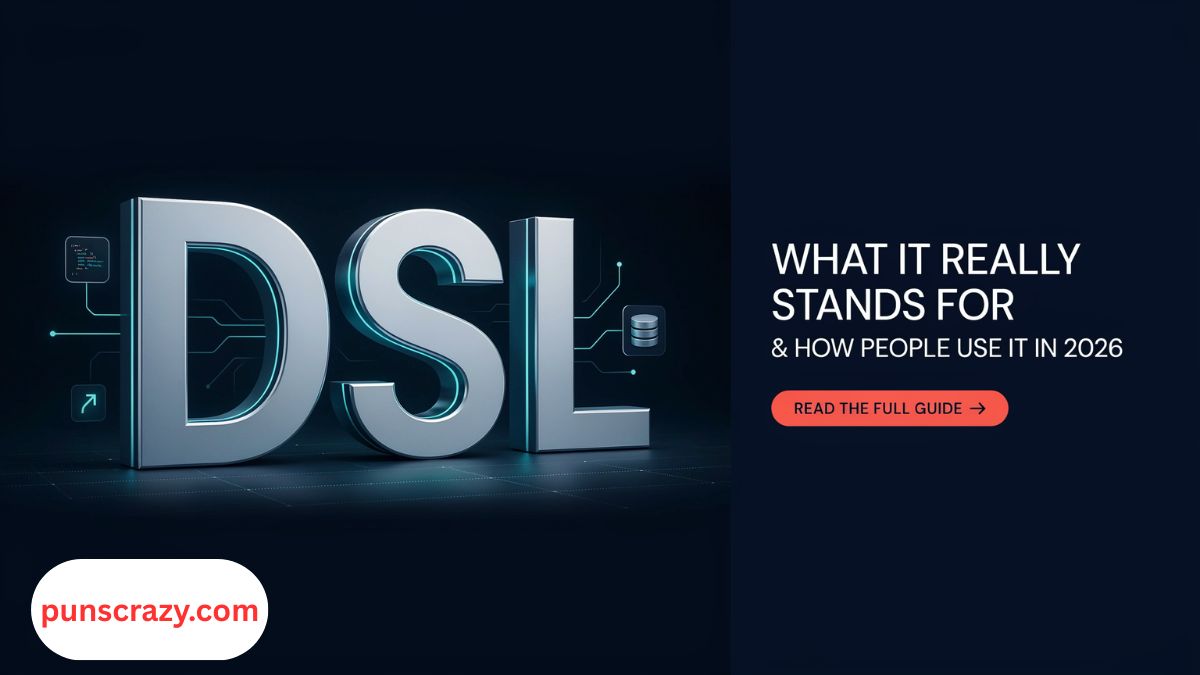
If you’ve stumbled across “DSL” in a comment section, a dating app bio, or a group chat, you’ve probably had one of two reactions: either you assumed it was about your home internet connection, or you had a vague sense it meant something else entirely and didn’t want to ask. You’re not alone. DSL meaning depends entirely on where you see it, and getting it wrong can lead to some pretty awkward replies.
This guide breaks down every major use of the acronym DSL, from its original technical roots in telecommunications to the much more common slang meaning you’ll find on TikTok, Instagram, and dating apps in 2026. By the end, you’ll know exactly what someone means when they drop “DSL” into a conversation, where the term came from, and how (or whether) to respond.
What Does DSL Mean?
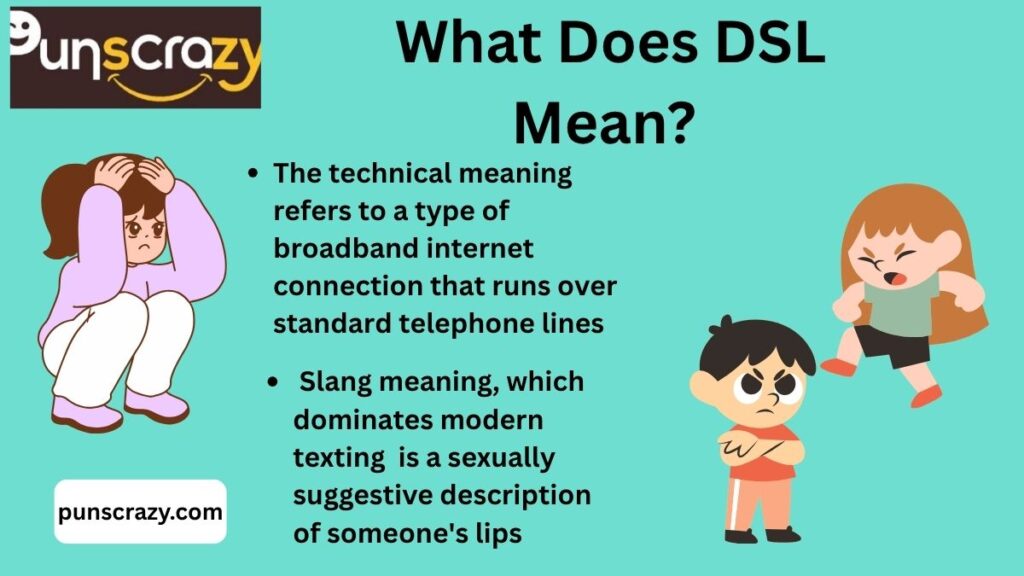
In short: DSL has two completely different meanings, and context is everything.
| Context | What DSL Stands For | Tone |
| Internet & technology | Digital Subscriber Line | Neutral, technical |
| Texting, social media, dating apps | “Dick Sucking Lips” | Sexual, flirty, sometimes crude |
The technical meaning refers to a type of broadband internet connection that runs over standard telephone lines. The slang meaning, which dominates modern texting and social media slang, is a sexually suggestive description of someone’s lips — typically used as a compliment, a joke, or a flirty comment under a photo.
Because these two meanings live in completely different worlds (an ISP forum versus an Instagram comments section), context almost always tells you which one is intended. Nobody texts “your internet has DSL” as a compliment, and nobody discusses Digital Subscriber Line speeds in a Snapchat DM.
DSL in Slang and Texting
What the Acronym Stands For
In internet slang and texting acronym culture, DSL stands for “Dick Sucking Lips.” It’s a blunt, sexualized description used to comment on someone’s lips when they appear full, plump, or prominent in a photo or video. It functions as visual slang — a quick way to react to someone’s appearance rather than to spell anything out in full.
The phrase is rarely typed out in full. Almost everyone uses the acronym instead, partly because it’s faster to type and partly because the abbreviated form softens an otherwise very explicit phrase.
Tone note: DSL is not a neutral or polite term. It carries an inherently sexual undertone, and how it lands depends heavily on the relationship between the people involved, the platform, and the context of the photo or conversation being commented on.
Where It Came From (Origin & Early Usage)
The slang use of DSL traces back to early-2000s internet forums, instant messaging culture, and hip-hop lyrics. Early references to the term as online slang began circulating on forums and in rap verses in the early-to-mid 2000s, around the same period that Digital Subscriber Line internet was becoming a common home connection across the US. That overlap in timing is part of why the two meanings have coexisted — and occasionally collided — for over two decades.
Hip-hop and R&B culture played a notable role in popularizing the phrase. References to full lips as a marker of attractiveness appeared frequently in music and entertainment media throughout the 2000s, and the acronym spread from lyrics and forum posts into everyday texting acronym use among younger internet users.
How the Meaning Evolved Over Time
What started as forum and instant-messaging slang has since migrated through several waves of internet culture:
- Early-to-mid 2000s: Circulated in internet forums, AIM/MSN messenger conversations, and early hip-hop lyrics.
- Late 2000s–2010s: Spread into mainstream texting abbreviations and early social media comment culture (Myspace, then Facebook and Twitter).
- 2020s–2026: Resurfaced repeatedly through TikTok trends, Instagram Reels captions, and “lip filler culture” content, where full or plump lips are a recurring beauty topic.
This kind of cyclical revival is common in internet culture — slang doesn’t die so much as go quiet for a while before a new platform or trend brings it back into circulation.
DSL in Other Contexts (Not Slang)
DSL as Digital Subscriber Line (Internet/Tech Meaning)
In telecommunications and network technology, DSL stands for Digital Subscriber Line — a type of broadband internet connection that transmits digital data over standard copper telephone lines. It was one of the first widely available alternatives to dial-up internet, offering significantly faster speeds without tying up a household’s phone line the way dial-up did.
Key facts about DSL internet:
- DSL technology was developed and commercialized starting in the late 1980s and became widely available to households through the 1990s and 2000s.
- It works by using frequencies on a telephone line that voice calls don’t use, allowing data transmission and phone calls to happen simultaneously.
- Common variants include ADSL (Asymmetric DSL, more common in homes) and SDSL (Symmetric DSL, more common in business settings).
- A DSL modem is required to connect a home network to the provider’s line.
- DSL speeds are generally slower than fiber optic internet and cable broadband, which is why many Internet Service Providers have shifted customers toward fiber where it’s available.
Why this matters for the slang confusion: Because DSL was a household name for “home internet” for nearly two decades, plenty of people — especially those outside Gen Z internet culture — still default to the technical meaning whenever they see the acronym. That generational gap is the single biggest source of confusion around the term today.
Other Niche Uses of “DSL”
Outside of slang and home internet, DSL also shows up as shorthand in a handful of more specialized fields:
- Software engineering: DSL commonly refers to a “Domain-Specific Language” — a programming language designed for a narrow, specific purpose (as opposed to general-purpose languages like Python or Java).
- Signal processing and engineering: DSL can appear in technical documentation referring to digital signal levels in certain systems.
- Healthcare documentation: Like many three-letter acronyms, DSL occasionally appears in clinical shorthand, though its meaning varies by facility and is never standardized the way ICD codes are.
These uses are far less common in everyday conversation than the slang or telecom meanings, but they’re worth knowing if you encounter “DSL” in a technical or professional document and the context doesn’t fit either of the two primary definitions.
How DSL Is Used in Real Conversations
Examples in Texts and Comments
Here’s how the slang version typically shows up in the wild:
- “omg you have DSL in that pic 😭” — a playful compliment between friends
- “the lighting in this selfie is giving DSL fr” — a meme-style observation, often ironic
- “DSL check 👀” — used as a caption or comment under a close-up photo
Examples in Dating App Bios and Messages
On dating apps, DSL sometimes appears as a flirty descriptor either in a bio or as an opening line in a message. It’s used far less often in formal bios than in casual back-and-forth messaging, where it functions similarly to other dating slang like a backhanded or forward compliment.
Tone Check: Compliment, Joke, or Inappropriate?
Whether DSL lands as a compliment or comes across as crude depends on three factors:
- Relationship context — Close friends joking around land very differently than a stranger’s DM.
- Platform — A meme comment under a viral video reads as humor; an unsolicited DM reads as a come-on.
- Consent and familiarity — Complimenting someone you know and have an established rapport with is very different from commenting on a stranger’s appearance uninvited.
Expert tip: If you’re unsure whether using DSL is appropriate in a given conversation, it almost certainly isn’t the right call. The term carries enough sexual weight that it should be reserved for situations where the tone is already clearly playful and mutual.
DSL Across Social Platforms
| Platform | Typical Usage | Common Tone |
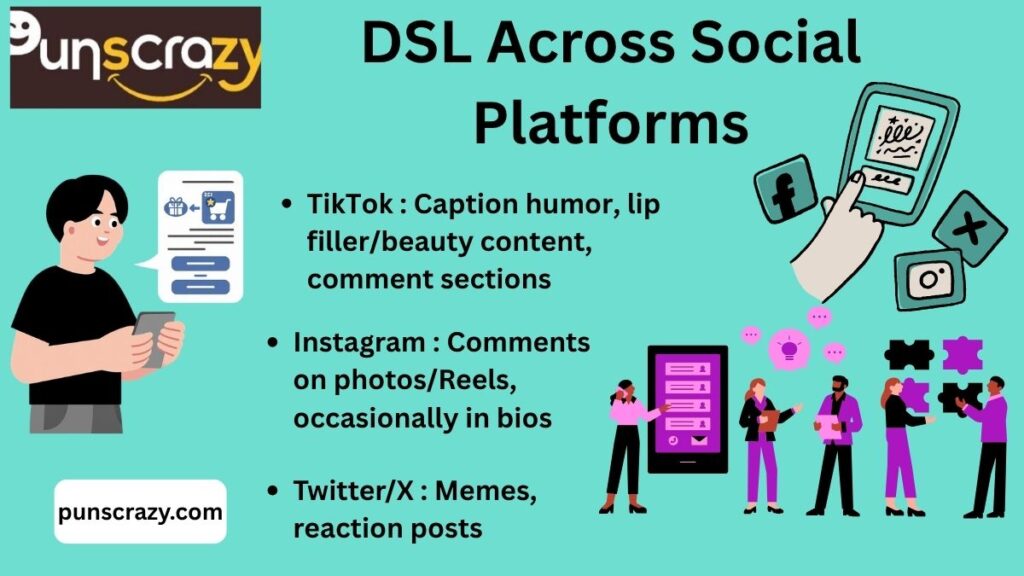
| TikTok | Caption humor, lip filler/beauty content, comment sections | Joking, meme-driven |
| Comments on photos/Reels, occasionally in bios | Flirty or complimentary | |
| Snapchat | Private messages and stories | More direct, often flirty |
| Twitter/X | Memes, reaction posts | Sarcastic or humorous |
| Personal one-on-one chats | Casual, flirty between known contacts |
Differences in How Gen Z vs. Millennials Use It
Younger users — particularly Gen Z — tend to use DSL ironically or as meme shorthand, often detached from a literal compliment and closer to internet humor. Older millennial users are more likely to either not recognize the slang meaning at all (defaulting to the Digital Subscriber Line definition) or to use it more literally as a flirtatious comment, closer to its early-2000s hip-hop and forum origins.
How to Respond When Someone Says DSL
Friendly/Casual Responses
If it’s coming from a friend or in a clearly joking context, a light response works fine:
- “haha thank you 😂”
- “stop 😭”
- A simple laughing emoji reaction
When to Brush It Off or Set a Boundary
If the comment comes from someone you don’t know well, or the tone feels off, you’re under no obligation to engage with it. A neutral non-response, ignoring the comment, or a direct “not really my thing, but thanks” are all completely reasonable. Because the term is inherently sexualized, it’s fair to treat it the same way you’d treat any other unsolicited comment about your appearance — engage only if you want to.
Similar and Related Slang Terms
DSL is part of a broader family of texting abbreviations and dating acronyms that show up in similar contexts. Here’s how it compares:
| Acronym | Meaning | How It Differs From DSL |
| DTF | Down To… (a casual hookup invitation) | Action-oriented; DSL is descriptive, not an invitation |
| ISO | In Search Of | Used to state what someone is looking for, not a compliment |
| LTR | Long-Term Relationship | Describes relationship goals, not appearance |
| DM | Direct Message | Refers to the act of messaging, unrelated to appearance |
The key distinction: DSL describes a physical feature in a sexually suggestive way, while terms like DTF and ISO communicate intent or relationship goals, and DM simply refers to a messaging action.
Common Misconceptions and Mistakes
Mistake 1: Assuming DSL only refers to internet technology. Outside of tech forums and ISP discussions, the slang meaning is far more common in everyday texting and social media, especially among users under 30.
Mistake 2: Confusing DSL with DLS. DLS isn’t a widely recognized standard acronym, but typos and autocorrect occasionally swap the letters, leading to confusion in fast-paced texting.
Mistake 3: Using it without reading the room. Because DSL carries an explicit sexual connotation, using it in a professional setting, a mixed-audience group chat, or with someone you don’t know well can easily come across as inappropriate, regardless of intent.
Mistake 4: Treating it as universally understood. Not everyone — particularly older generations or people outside heavy social media use — will recognize the slang meaning at all, which can lead to genuinely confused reactions rather than offense.
Popularity and Search Trends
The slang use of DSL has experienced renewed search interest tied to recurring TikTok and Instagram beauty trends, particularly content around lip fillers, “plump pout” aesthetics, and viral close-up photo formats. Search interest for the term tends to spike alongside these beauty and meme cycles rather than staying at a constant baseline, which is typical for internet slang that gets periodically “rediscovered” by new platform trends rather than fading permanently.
Meanwhile, search interest in the technical meaning (Digital Subscriber Line) has gradually declined over the past decade as fiber optic internet and cable broadband have replaced DSL connections in most urban and suburban areas — though DSL service remains relevant in many rural areas where fiber infrastructure hasn’t been built out yet.
Key Takeaways
- DSL has two primary meanings: Digital Subscriber Line (technical/internet) and “Dick Sucking Lips” (sexual slang about lips).
- The slang meaning dominates in texting, dating apps, and social media — especially among Gen Z users.
- Context is the deciding factor — platform, relationship, and conversation tone tell you which meaning is intended.
- The term carries a sexual undertone and should be used carefully, if at all, with people you don’t know well.
- The technical meaning remains relevant in rural broadband contexts even as fiber internet becomes more widespread elsewhere.
Frequently Asked Questions
What does DSL mean in texting?
In texting and social media slang, DSL stands for “Dick Sucking Lips,” used as a sexually suggestive comment about someone’s lips, typically intended as a compliment or joke.
What does DSL mean on Instagram or TikTok?
On both platforms, DSL is most commonly used as caption or comment humor referencing someone’s lips, often tied to beauty trends like lip fillers or “plump pout” content.
Does DSL have a different meaning in tech?
Yes. In telecommunications, DSL stands for Digital Subscriber Line, a type of broadband internet connection delivered over telephone lines.
Is DSL still used in 2026?
Yes, both meanings remain active. The slang usage continues to resurface through TikTok and Instagram trend cycles, while the technical meaning still applies to millions of broadband connections, particularly in areas without fiber access.
What’s the difference between DSL and DTF?
DSL is a descriptive comment about appearance (specifically lips), while DTF expresses willingness toward a casual hookup. They’re used in similar casual/flirty contexts but communicate very different things.
Conclusion
DSL is one of those acronyms that means almost nothing without context. The DSL meaning changes completely depending on where you see it. On a tech forum, it points to Digital Subscriber Line and slow but steady home internet. On TikTok or in a dating app chat, it’s something far more flirty and personal. Knowing the difference saves you from awkward replies and helps you read the room before you respond.
The real skill isn’t memorizing a definition. It’s understanding the DSL meaning behind the moment. Who’s saying it, where, and why all matter more than the acronym itself. Once you know both sides of this term, you’ll never second-guess a comment or caption again. That’s the real value here: confidence in conversation, no confusion left behind.

Will Jack is the creative mind behind Punscrazy, a humor-focused platform dedicated to clever wordplay and lighthearted entertainment. With a passion for puns and witty expressions, he curates and creates engaging content that brings smiles to readers around the world. His work blends creativity with simplicity, making humor accessible for everyday moments, social media captions, and casual fun.