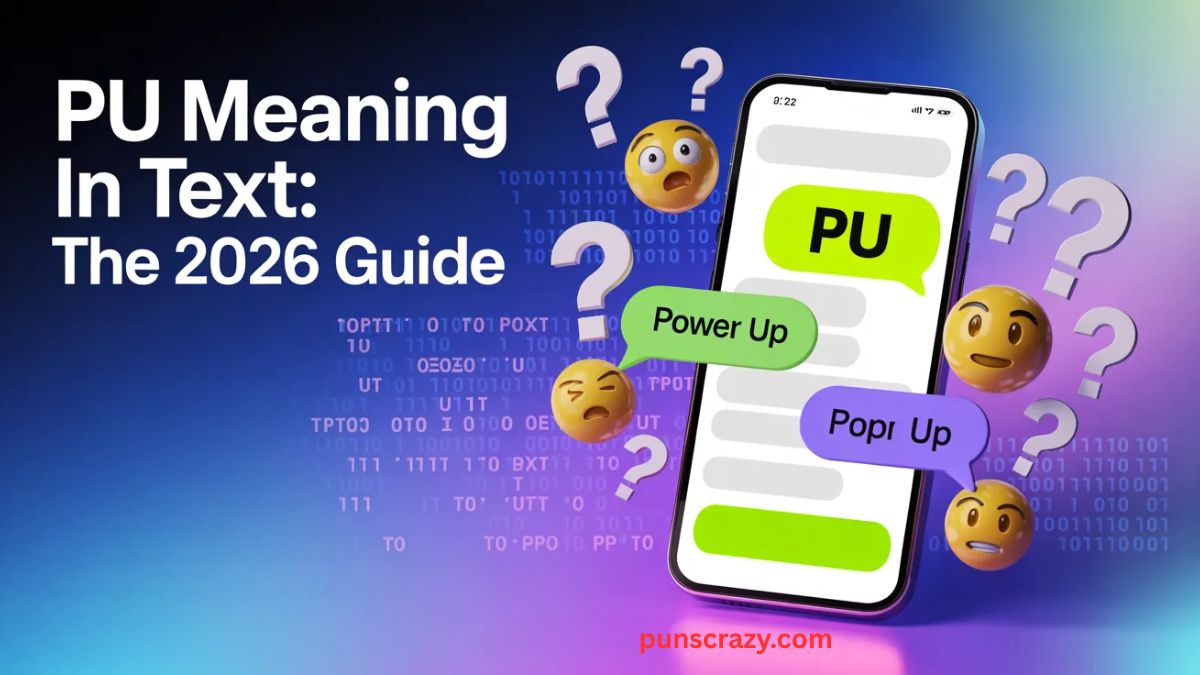
You’re mid-conversation, vibes are good — then someone drops a “PU” and everything screeches to a halt. Do they want you to pick them up? Pop up somewhere? Does something gross them out? Or is this a gaming thing entirely? PU meaning in text?
Here’s the truth: PU meaning in text is genuinely one of the trickiest two-letter combinations floating around digital communication right now. It doesn’t have one meaning. It has six — and the wrong read can make things awkward fast.
This guide breaks down every real meaning, every platform, every context. By the end, you’ll never second-guess a “PU” again.
What Does “PU” Actually Mean in Text? (It Depends More Than You Think)
Short chat abbreviations are always the hardest to decode. At least “LOL” has one job. PU internet slang, on the other hand, shapeshifts depending on who’s texting you, what platform you’re on, and what’s happening in the conversation.
There’s no vowel. No built-in context clue. Just two capital letters doing heavy lifting across wildly different situations.
“The shorter the abbreviation, the harder the work context has to do.” — a truth every linguist studying digital messaging language would nod at.
Here’s what makes PU slang uniquely confusing:
- It functions as a verb phrase (pick up, pop up, put up)
- It functions as an exclamation (P.U. — that smell!)
- It functions as a technical term (power up, polyurethane)
- It shifts meaning completely based on platform, relationship, and tone
The table below gives you the fastest orientation possible:
| Platform | Most Likely PU Meaning |
| iMessage / WhatsApp | Pick Up |
| Snapchat / Instagram DMs | Pop Up |
| Discord / Gaming Chats | Power Up |
| Dating Apps | Pop Up (flirty) |
| Twitter/X / TikTok Comments | P.U. (disgust/humor) |
| DIY / Sneaker / Fashion Forums | Polyurethane |
| Workplace Slack or Teams | Pick Up (a call/task) |
Now let’s dig into each meaning properly.
Every Real Meaning of “PU” — Ranked by How Often People Actually Use It
PU = Pick Up (The Most Common One)
Ask a random sample of people what does PU mean in texting, and the majority will say “pick up” — and they’re not wrong. This is the dominant meaning in everyday casual texting between friends, family members, and anyone coordinating logistics.
You’ll see it constantly in contexts like:
- Ride coordination: “PU at 6?” means “pick me up at 6”
- Package logistics: “Can you PU the order?” means grab it
- Casual plans: “PU and we’ll head out” — straightforward meetup language
The beauty of this meaning is how efficiently it handles ride arrangement slang. Parents text it to teenagers. Friends use it for carpools. Even delivery-adjacent conversations lean on it.
What shifts the meaning here is tone. “PU at 3?” reads neutral and logistical. “Can you PLEASE PU” reads urgent. Pay attention to punctuation and surrounding words — they’re your biggest clues.
PU = Pop Up (Social Media’s Favorite)
On Snapchat, Instagram, and TikTok, “PU” almost always means pop up — as in, appear, show up, make yourself visible. It’s social media slang built around the culture of casual, low-pressure presence.
“PU on snap” literally means “appear on Snapchat.” Someone’s inviting you to initiate a conversation or show activity on their feed.
There’s a subtle but important distinction here:
- “PU on snap” = message me or open my snap
- “PU at my place” = physically show up
- “PU on live” = join a live stream or broadcast
Gen Z texting culture runs heavily on this meaning. It’s casual, it’s non-committal, and it leaves room for either party to play it cool. That ambiguity is often intentional — especially on dating apps (more on that shortly).
PU = P.U. (The Disgust / Smell Reaction)
This one’s got history. Long before smartphones existed, “P.U.” was a spoken and written exclamation used to signal a bad smell or express disgust — think old cartoons, comic strips, and kids wrinkling their noses dramatically.
The phrase is phonetically related to “pee-yew,” an onomatopoeic disgust reaction that mimics the sound people make when hit with a gross odor. It migrated naturally into texting slang as humor culture found a home in digital spaces.
Modern use looks like:
- “PU, what is that?” — reacting to a gross photo or story
- “PU 😂” — comedic exaggeration in a group chat
- “That is PU level bad” — using it as an adjective
Interestingly, there’s a generational split here. People over 30 tend to recognize this P.U. smell meaning immediately. Younger users sometimes need the context around it — they’re more likely to read it as pop up or pick up by default.
Capitalization also signals things. “P.U.” with periods leans toward the disgust expression. “PU” without periods leans toward pick up or pop up. It’s a small detail that carries real weight.
PU = Put Up (Situational and Rare)
This one almost never stands alone. You’ll mostly encounter it inside a challenge phrase — the classic being “PU or shut up,” a texting-era spin on “put up or shut up.”
It’s confrontational by nature and needs surrounding context to land. If someone sends you a lone “PU” and means put up, you’d likely need prior conversation to understand it. Think competitive banter, gaming rivalries, or heated debates.
Don’t lead with this interpretation. It’s rare enough that it should sit last on your mental shortlist.
PU in Gaming and Streamer Culture — The Overlooked Meaning

Here’s the one most PU slang explained articles skip entirely: Power Up.
In Discord servers, Twitch chats, in-game communication channels, and co-op gaming coordination, “PU” commonly means power up — a direct, urgent command or request.
Examples:
- “Drop me a PU, I’m almost dead” — asking for an in-game boost
- “PU incoming!” — alerting teammates of a power-up on the map
- “Need PU ASAP” — fast-paced coordination under pressure
As gaming communities have bled into mainstream social culture, this meaning has started appearing in regular texts between friends who game together. If your contact is a gamer and sends you a “PU” outside the game, there’s a solid chance they’re still thinking in gaming terms.
PU = Polyurethane (Niche but Real)
Niche? Yes. But if you’re in sneaker culture, furniture communities, DIY circles, or fashion forums, you’ve definitely seen this:
- “Is this PU leather or genuine leather?”
- “The PU coating is peeling already”
- “Avoid PU soles in wet weather”
PU abbreviation meaning polyurethane is widely understood in those specific communities. It’s a material designation — synthetic, flexible, commonly used in faux leather products, shoe soles, and foam insulation.
Outside those communities, though? Nobody’s texting “PU” and meaning polyurethane in a group chat. Context collapses this one fast.
How Platform Changes Everything — PU Across Digital Spaces
Snapchat and Instagram DMs
Snapchat usage and Instagram slang have basically claimed “pop up” as their home turf. When someone replies “PU” to your story or sends it out of nowhere in a DM, they almost certainly want you to initiate contact or show up — virtually or physically.
Online visibility is central to both platforms. “PU” fits right into that culture of casual, low-effort invitations. Story replies are quick, attention spans are short, and “PU” does exactly what those platforms reward: it’s fast, it’s light, it signals interest without overcommitting.
iMessage and WhatsApp (Personal Texting)
In phone slang and everyday casual chats, pick up is king. iMessage threads between friends about rides, errands, or meetups make up a huge share of how “PU” gets used daily.
Family group chats are especially heavy with this meaning. “Dad can you PU from practice?” That sentence needs zero additional context for most people reading it.
Gaming Platforms — Discord, Xbox, PS Network
As covered above, power up rules here. The urgency of gaming communication — short, fast, tactical — makes “PU” a perfect fit. Nobody writes out “power up” when a boss is incoming and their teammate needs a boost.
Dating Apps — Tinder, Hinge, Bumble
This is where PU meaning in dating apps gets genuinely interesting. On flirty chats across Tinder, Hinge, and Bumble, “PU” walks a line between pop up to my place and pick up where we left off — and sometimes both at once.
The ambiguity is often deliberate. It’s a soft, deniable, low-risk invitation. If they like the response they get, great. If not, they can always claim they just meant something logistical.
Real example of how this plays out:
Match: “Hey, PU later?” You: “Sure, where are you thinking?” Match: “My place, I’ll send address”
That sequence happens thousands of times daily. The “PU” did all the work while keeping things casual enough that neither person had to be vulnerable upfront.
Professional Slack or Teams Messages
Work communication and PU slang don’t mix particularly well — but it happens. In a professional settings context, “PU” almost always means pick up: a call, a task, a dropped thread.
“Can someone PU this ticket?” in Slack is perfectly readable. But send “PU later?” to a manager who doesn’t know the slang and you’ve created a weird moment for no reason.
Rule of thumb: full words in formal messages, always.
TikTok Comments and Twitter/X Replies
Here, the P.U. disgust reaction and humorous uses thrive. Comment sections are high-speed, reaction-based environments where meme culture slang dominates. Someone posts a cringe video and the top comment is just “PU 💀” — everyone gets it immediately.
Is “PU” Flirty, Rude, Neutral, or Something Else?
When It’s Completely Neutral
Most of the time, PU in texting carries zero emotional charge. Logistics. Coordination. Gaming. Pure function. “PU at noon” is as charged as “see you at noon” — which is to say, not at all.
When It’s Flirty or Suggestive
The flirty texting slang version lives mainly on dating apps and between people who already have a flirtatious dynamic. “PU later?” from someone you’ve been talking to romantically is a low-key invitation. It’s casual enough to be deniable but pointed enough to register.
When It’s Rude or Dismissive
The bad smell / P.U. meaning can absolutely land as rude if directed at someone personally rather than at a situation. In a group chat, “PU 😂” about a meme is funny. Aimed directly at someone’s choice, appearance, or message? That’s a different energy entirely.
When It’s Just Confusing
The real danger zone: mix ups and wrong meanings. Sender means “pop up at my place.” Receiver reads “pick up something from the store.” The reply makes zero sense. Both parties are confused. The conversation derails.
This is the most common real-world problem with PU online slang — not rudeness, just genuine miscommunication.
How to Respond to “PU” Without Looking Clueless
When You Think It Means Pick Up
Keep it logistical and simple:
- “Yeah — what time?”
- “Sure, where are you?”
- “On my way, give me 15”
When You Think It Means Pop Up
Match the casual energy:
- “Sure, give me 20”
- “Can’t tonight — tomorrow work?”
- “Heading over now”
When You’re Not Sure Which One They Mean
Just ask. Seriously. It takes three seconds and prevents a whole confusing back-and-forth:
- “PU as in come over or pick something up?”
- “You mean stop by, or literally pick you up?”
Asking doesn’t make you look clueless. It makes you look like someone who pays attention — which is always the better read.
Funny Replies That Work
For close friends who enjoy banter:
- “PU yourself, I’m busy” (playful deflection)
- “PU? You couldn’t even spell the full thing?” (light roasting)
- “PU as in pee-yew? Because your timing definitely stinks 😂”
Professional Replies
If “PU” lands in a work context:
- “Happy to pick that up — can you share the details?”
- “I’ll take that on — just looping in [name] too”
Clean. Efficient. No slang back.
Common Mistakes People Make With “PU” (And How to Avoid Them)
Assuming It Always Means the Same Thing
The single biggest error. Someone learns “PU = pick up” and applies it universally. Then they get a “PU on snap” and reply with ride logistics. Awkward.
Context matters — always check platform first, then relationship, then tone.
Confusing It With “Poo” or Treating It as Offensive by Default
“PU” is not bathroom humor (usually). The P.U. disgust reaction is about smell, not anything else. And even then, it’s almost always used humorously rather than seriously.
Don’t come in defensive. Nine times out of ten, there’s nothing offensive intended.
Using It in Professional Messages Without Context
A small slang error in a work setting can signal cultural mismatch to colleagues or managers. “Can you PU this?” to a senior stakeholder who doesn’t text casually? Just write “pick up” and move on with your life.
Mixing Up Pop Up and Pick Up in Romantic Contexts
This specific mix up matters more than the others. If someone on a dating app says “PU later?” and you respond with “Sure, what do you need me to grab?” — that’s a real conversation derailment that could kill the vibe entirely.
Read the relationship context before the literal words.
Overlooking the Gaming Meaning Entirely
If your friend texts you “need PU rn” and they’re a heavy gamer, they might genuinely be mid-session asking for a power-up in some shared game context — or using the phrase out of pure habit. Don’t assume you’re being asked to drive somewhere at 11pm.
Similar Two-Letter Slang You Should Know
So “PU” isn’t the last abbreviation to trip you up. Here are the most common similar slang terms worth having on your radar:
| Slang | Most Common Meaning | Platform Dominant |
| HMU | Hit Me Up | iMessage, Instagram |
| LMK | Let Me Know | Universal |
| NGL | Not Gonna Lie | Twitter/X, TikTok |
| IRL | In Real Life | Universal |
| OMW | On My Way | iMessage, WhatsApp |
| WYD | What You Doing | iMessage, Snapchat |
| RN | Right Now | Universal |
| BRB | Be Right Back | All platforms |
| FR | For Real | TikTok, iMessage |
| SMH | Shaking My Head | Twitter/X, iMessage |
| ONG | On God (I’m serious) | TikTok, Gen Z texts |
| POV | Point of View | TikTok, content slang |
Notice the pattern: all of these are shorthand built for fast-paced communication. They save keystrokes, move conversations faster, and signal that you’re fluent in modern texting language. Miss one and you’re suddenly the person asking “wait what does that mean?” in a group chat.
When You Should Skip “PU” Entirely
Formal or Professional Communication
Emails, LinkedIn messages, client proposals — none of these are “PU” territory. Spell it out. Always. The abbreviation signals informality that might undercut how you want to be perceived in work communication settings.
Cross-Cultural or International Conversations
PU abbreviation explained makes sense to a fluent English speaker steeped in internet culture. But a non-native English speaker might read “PU” phonetically, or simply have no reference point for any of its meanings. Skip it. Use full words. Communication clarity wins every time.
Emotionally Charged or Sensitive Conversations
If someone’s going through something difficult and you’re checking in — don’t abbreviate. “PU” in a serious conversation reads cold and dismissive. Full sentences signal that you’re actually present.
First Impressions
New contact, first date, job application, client introduction — these aren’t contexts for casual texting slang. People make judgments fast. Full words, proper punctuation, and clear meaning build better first impressions than any shorthand ever will.
FAQs
What does PU mean in a text message?
PU meaning in text most commonly refers to “pick up” in everyday texting — as in coordinating a ride or asking someone to grab something. On social media platforms, it more often means “pop up,” an invitation to show up or message someone. Context is everything.
Does PU mean pick up or pop up — which is more common?
In personal text messages and iMessage/WhatsApp conversations, pick up edges out as the more frequent meaning. On Snapchat, Instagram, and TikTok, pop up dominates. Neither is universally “correct” — platform decides.
What does “PU on snap” mean specifically?
“PU on snap” means “pop up on Snapchat” — send a snap, message me, or appear on the platform. It’s an open-ended, low-pressure invitation common in Snapchat usage between friends or people who are casually interested in each other.
Is PU ever considered offensive or rude?
Rarely and situationally. The P.U. smell reaction form can feel dismissive or mocking if directed at a person rather than a situation. In most contexts though, it’s either neutral or humorous — not aggressive.
What does PU mean on dating apps like Tinder or Hinge?
On dating apps, “PU” typically signals “pop up” — a casual, semi-flirty invite to come over or reconnect. The intentional ambiguity of PU meaning in dating chats makes it a popular low-risk move for soft invitations.
How do I know which PU meaning someone is using?
Use the platform + relationship + tone framework. Platform narrows it down fast. Relationship (friend, date, coworker, parent) narrows it further. Tone and surrounding words close the gap. When in doubt, ask directly — it’s always the smarter move.
Can PU mean power up in gaming?
Absolutely. PU meaning in gaming as “power up” is well-established in Discord, Twitch, and in-game communication. If a gaming friend sends you “PU” outside a game, there’s a reasonable chance they’re still in that headspace.
Should I ever use PU in a work message?
Only if the context makes it unambiguous (like “can you PU this call?”) and you already have an informal relationship with the recipient. In formal messages or with anyone senior, just write the full phrase. The two seconds saved aren’t worth the confusion risk.
What’s the difference between PU and HMU?
Both are invitations — but “HMU” (Hit Me Up) is explicitly asking someone to contact you. “PU” is more context-dependent: it could mean come over, pick me up, or message me depending on the situation. HMU is unambiguous. PU requires reading the room.
The Bottom Line
Six different meanings. Five major platforms. One two-letter abbreviation doing all of it simultaneously. That’s the reality of PU meaning in text in 2026.
The framework is simple: check the platform first, consider the relationship second, read the tone third. Pick up lives in personal texting and logistics. Pop up lives on social media and dating apps. Power up lives in gaming. P.U. lives in humor and reaction culture. Polyurethane lives in niche product communities. And put up barely shows up unless someone’s feeling confrontational.
When you’re still not sure? Ask. A quick “do you mean come over or pick you up?” takes three seconds and saves an entire thread of confused replies.
The real skill in online communication slang isn’t memorizing every abbreviation — it’s learning to read context fast. Do that, and “PU” (along with everything else in Gen Z digital communication) becomes a whole lot less confusing.

Will Jack is the creative mind behind Punscrazy, a humor-focused platform dedicated to clever wordplay and lighthearted entertainment. With a passion for puns and witty expressions, he curates and creates engaging content that brings smiles to readers around the world. His work blends creativity with simplicity, making humor accessible for everyday moments, social media captions, and casual fun.