If you’ve seen “OPP” pop up in a text, a TikTok caption, or a group chat and had no idea what it meant, you’re not alone. This one little acronym carries more history and more confusion than almost any other piece of slang floating around right now. Depending on who sent it, OPP meaning can range from “my rival” to a decades-old song reference to a completely unrelated business term.
By the end of this guide, you’ll know exactly what OPP stands for in every context that matters, where the term came from, how it’s used across TikTok, Instagram, Snapchat, and WhatsApp, and how to respond if someone calls you one. Let’s get into it.
Key Takeaways
- OPP (lowercase “opp”) most commonly means opponent, enemy, or rival in modern texting and social media slang.
- The capitalized O.P.P. traces back to the 1991 Naughty by Nature song, standing for “Other People’s Property.”
- Tone and context determine whether the word is playful or genuinely hostile, so don’t assume either extreme automatically.
- “Opp” and “OP” are different terms; don’t confuse enemy slang with “original poster” or “overpowered.”
- Outside of slang, “opp” can also mean “opportunity” in business settings or “out of print publication” in book collecting.
- Keep the term out of professional writing, and use good judgment about tone when using it casually.
OPP Meaning at a Glance
In most modern texting and social media contexts, OPP (usually written lowercase as “opp”) means opponent, enemy, or rival. It’s slang that grew out of hip-hop and street culture and has since spread into everyday teen and Gen Z conversation.
But that’s not the only OPP definition out there. Here’s a fast breakdown:
| Meaning | Context | Example |
| Opponent / enemy / rival | Texting, social media, gaming | “He’s not your friend, he’s an opp.” |
| Other People’s Property (or Partner) | 1991 Naughty by Nature song | “You down with O.P.P.?” |
| Opportunity | Business, sales, casual shorthand | “We’ve got a new opp with that client.” |
| Out of Print Publication | Publishing and book collecting | “That edition is OPP now.” |
Most people searching for OPP meaning in text are asking about the first one, so that’s where we’ll spend the bulk of this guide. But knowing the others will save you from some genuinely awkward misreadings.
Where “OPP” Actually Comes From
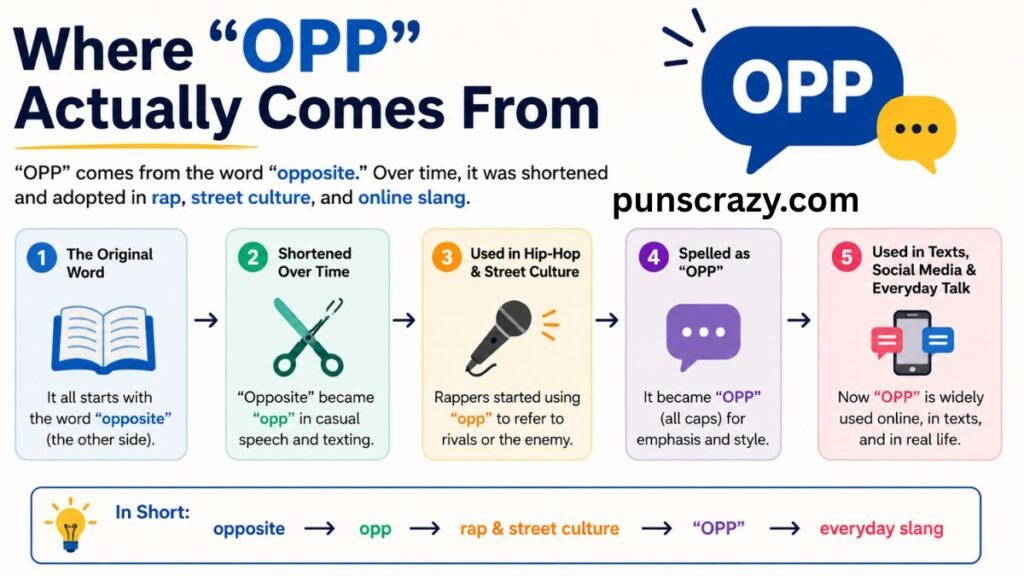
To really understand the OPP slang meaning, it helps to know that there are two separate origin stories that eventually got tangled together in pop culture.
The 1991 Naughty by Nature Song (Other People’s Property)
The capitalized version, O.P.P., exploded into mainstream awareness through Naughty by Nature’s 1991 hit song of the same name. In that track, O.P.P. stood for “Other People’s Property,” with the lyrics using a more explicit word in place of “Property” to describe getting involved with someone who’s already in a relationship. The song hit number six on the Billboard Hot 100 and stayed culturally relevant for decades, which is why plenty of people over 35 still associate OPP with that song before anything else.
The AAVE Slang Root: “Opp” as Short for “Opponent”
The lowercase “opp” that dominates today’s texting and social feeds has a different lineage. It comes out of African American Vernacular English (AAVE) and hip-hop culture, where it developed as a natural shortening of “opponent.” This version isn’t really an acronym at all. It’s a clipped word, the same way “totally” becomes “totes” or “probably” becomes “probs.” That distinction matters because a lot of competing guides treat “OPP” and “opp” as the exact same thing when they actually developed along separate paths before converging in modern slang usage.
How the Two Meanings Diverged Over Time
Rap and street culture kept using “opp” to describe rivals, enemies, and anyone considered a threat, and that usage got amplified through drill music, gang-adjacent slang, and eventually mainstream hip-hop lyrics. Meanwhile, the older O.P.P. song reference stuck around mostly as a nostalgic callback rather than active slang. By the time TikTok and Instagram took over youth communication, “opp” (lowercase, meaning enemy) had completely overtaken the older acronym in day-to-day use. That’s the version we’ll unpack in depth now.
The Main Meaning Today: OPP as “Opponent” or “Enemy”
When someone uses opp in a text or caption today, they almost always mean it as a term for a rival, enemy, or someone on the opposite side of a conflict. It carries a certain edge to it, but the intensity varies wildly depending on who’s saying it and why.
Singular vs. Plural: “An Opp” vs. “My Opps”
You’ll see both forms used constantly:
- Singular: “He’s an opp.” (one specific rival)
- Plural: “Watch out for my opps.” (a group of rivals, or a general category of people against you)
The plural “opps” is especially common in music and gaming contexts, where it refers to an entire opposing side rather than one individual.
Using It as a Verb: “Opp Someone,” “Opp Out”
“Opp” doesn’t just function as a noun. It’s also used as a verb in some circles:
- “To opp someone” means to act against them or treat them as an enemy.
- “Opp out” describes the act of confronting or moving against a rival.
This verb usage is less common in casual teen texting and shows up more in music lyrics and street slang specifically, so don’t be surprised if you see the noun form far more often in everyday DMs.
Serious vs. Playful Tone: How to Tell the Difference
Here’s the part that trips up a lot of parents and outsiders: tone determines everything with this word. Among friends, calling someone an “opp” during a video game loss or a friendly debate is almost always a joke. In more serious contexts, especially anything connected to real neighborhood tension or gang-adjacent culture, the word can signal actual hostility. Context clues that suggest a playful use include laughing emojis, gaming references, or sports competition. Context clues suggesting something more serious include mentions of real-world confrontation, addresses, or specific threats.
How OPP Is Used in Real Conversations
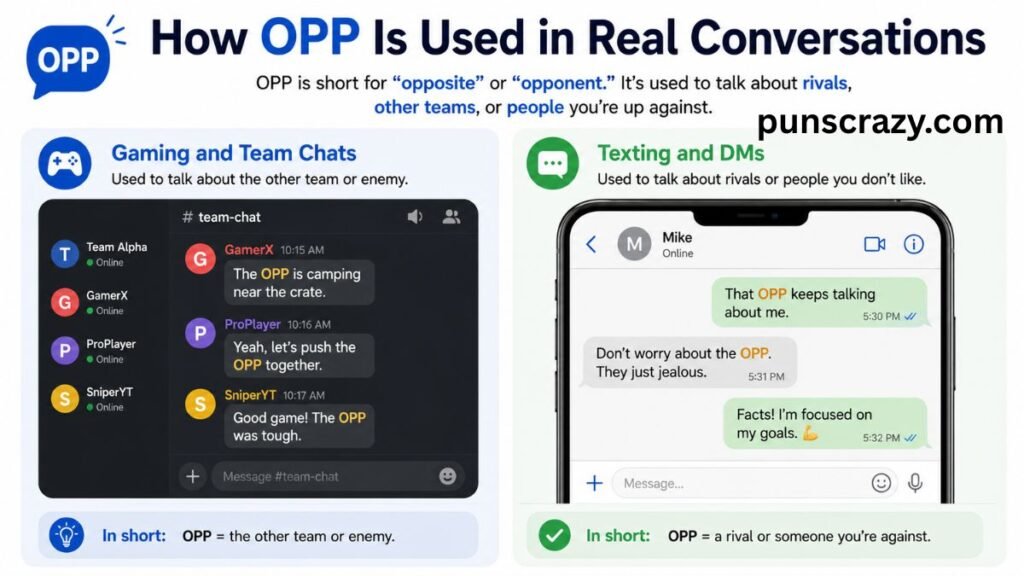
Understanding the OPP meaning in chat requires seeing it in action. Here are realistic examples across different situations.
Texting and DMs
- “Don’t invite him, he’s an opp.”
- “She’s been acting like my opp since the breakup.”
- “That’s crazy, why is he even talking to the opps?”
Gaming and Team Chats
Gamers frequently borrow slang from hip-hop culture, and “opp” fits right in when describing the enemy team or a rival player.
- “Watch the opp on the left flank.”
- “Our opps keep camping that spawn point.“
Music and Hip-Hop Culture
“Opp” is deeply embedded in modern rap and drill music, where it frequently describes real or implied rivals. Artists in this space use the term so often that it’s become one of the most recognizable pieces of vocabulary in the genre, and its frequent appearance in lyrics is a major reason the word spread so quickly into general youth slang.
Social Media Captions and Comments
- “POV: you finally cut off your opps 💯”
- “New year, no opps allowed”
OPP Across Platforms: Any Real Differences?
The core OPP meaning online doesn’t change platform to platform, but the way it shows up does shift slightly depending on the app’s culture.
TikTok
TikTok is arguably the biggest driver of OPP meaning on TikTok searches, mostly because the term shows up constantly in trending audio, comment sections, and “story time” style videos where creators talk about cutting off rivals or drama. It’s often used lightheartedly here, paired with humor or relatable content about friendships and social circles.
On Instagram, “opp” tends to show up in captions and comments more than in Stories, often framed around personal growth (“blocked all my opps this year”) or subtle shade toward someone without naming them directly.
Snapchat
Because Snapchat skews toward closer, more private friend groups, OPP meaning in Snapchat chats tends to lean playful, usually referencing inside jokes between friends rather than public callouts.
WhatsApp usage is less public by nature, so “opp” here typically appears in private group chats among friends discussing someone outside the group, rather than in any kind of broadcast or public-facing content.
Other Meanings of OPP (Non-Slang)
Not every use of OPP is about rivalry. Depending on the industry or setting, it can mean something else entirely.
Opportunity (Business & Sales Shorthand)
In sales, CRM software, and corporate messaging, “opp” is common shorthand for “opportunity,” usually referring to a potential deal or lead.
- “We logged a new opp in the pipeline.”
- “That opp is worth following up on before Friday.”
Out of Print Publication (Publishing & Collecting)
Book collectors and rare book dealers sometimes use OPP to describe a title that’s no longer being printed, which affects its resale value and availability.
Technical & Field-Specific Uses
Outside of slang and business, “OPP” occasionally shows up as a field-specific acronym in more technical documentation (for example, certain electrical and engineering contexts use it as shorthand for “over power protection“). These uses are rare in everyday conversation and almost never what someone means when they text you the word, but they’re worth knowing if you encounter the term in a professional or technical document rather than a chat.
OPP vs. OP: Don’t Mix These Up
One of the most common points of confusion is the difference between OPP and OP. These look similar but mean completely different things.
| Term | Meaning | Where It’s Used |
| OP | “Original Poster” or “Original Post” | Forums, Reddit, TikTok comments |
| OP | “Overpowered” | Gaming communities |
| Opp | “Opponent” or “enemy” | Texting, social media, rap culture |
Common Mix-Up Examples
- “That character is OP in the new update” = overpowered, not an enemy.
- “OP said they’d post an update tomorrow” = original poster, not a rival.
- “He’s an opp, don’t trust him” = enemy, unrelated to either OP meaning above.
If you see someone use “OP” while discussing gaming balance or a forum thread, that’s almost certainly not the same word as “opp” used to describe a rival, even though they’re pronounced similarly and frequently confused by people newer to internet slang.
Is “OPP” Offensive or Dangerous to Use?
This is genuinely one of the more important questions to ask before you use the term yourself, and it deserves a straightforward answer rather than a vague one.
When It’s Harmless Banter
Among friends, in gaming contexts, or in playful social media captions, “opp” is typically harmless. It functions similarly to calling someone your “rival” in a lighthearted way, especially in group chats where everyone understands the joke.
When It Signals Real Conflict
In some communities, particularly those connected to gang culture or serious street conflict, “opp” carries much heavier weight and can reference real-world danger or hostility. This is part of why the word can sound alarming out of context, and why blanket statements like “it’s always just a joke” or “it’s always serious” both miss the mark. Tone, relationship, and setting are what actually determine the weight of the word.
A Note for Parents: What to Know If You See This in Your Kid’s Texts
If you’re a parent who spotted “opp” in your child’s messages, take a breath before assuming the worst. In the overwhelming majority of cases among teens, the word is used the same way kids have always talked trash about a rival sports team, a classmate they’re annoyed with, or a friend group disagreement. That said, it’s reasonable to ask about it directly. A simple, non-confrontational question like “Who’s the opp you were texting about?” usually gets an honest, often funny answer. If the context involves specific names, locations, or genuine fear, that’s worth taking more seriously and addressing with more care.
How to Respond If Someone Calls You an “Opp”
Getting called an opp can feel confusing if you’re not familiar with the term, so here’s how to handle it depending on the situation.
Chat-Style Response Examples
- Playful context: “Lol I’m not an opp, I just don’t agree with you 😂”
- Confused context: “Wait what did I do to be an opp now?”
- Firm context: “I’m not your opp, I’m just not doing that.”
When to Take It Seriously vs. Brush It Off
If the term is used in a group chat during a game or a friendly disagreement, it’s almost always safe to laugh it off. If it comes with genuine anger, specific threats, or repeated targeting outside of a joking context, that’s a signal to address it directly or involve a trusted adult, rather than assuming it’s just slang.
Common Mistakes People Make With OPP
- Using it in professional writing or formal messages. “Opp” is casual slang and doesn’t belong in emails, resumes, or brand communications unless you’re intentionally writing in a very informal, youth-targeted voice.
- Confusing OPP with OP. As covered above, these are different terms with different meanings, and mixing them up leads to genuinely confusing conversations.
- Assuming it always means hostility. Plenty of uses are playful, and treating every instance as a red flag misreads the tone of casual conversation.
- Ignoring context clues entirely. The same three letters can mean something totally harmless or genuinely concerning, so context always has to be factored in before reacting.
Best Practices for Using OPP Correctly
- Read the room before using it. Match the tone of the conversation you’re already in rather than introducing the term cold.
- Keep it out of brand or professional accounts. If you manage a business’s social media, stick to plain language like “rival” or “competitor” instead.
- Add context for mixed audiences. If you’re posting somewhere with a broad or older audience, a quick clarifying phrase avoids confusion.
- Don’t use it to genuinely harm or target someone. Slang aside, labeling a real person as an enemy in a public post can escalate situations that don’t need escalating.
Frequently Asked Questions
What is the full form of OPP?
There isn’t one single full form. Lowercase “opp” is a clipped version of “opponent,” while capitalized O.P.P. historically stood for “Other People’s Property” in the 1991 Naughty by Nature song.
What does OPP mean in texting?
In texting, OPP meaning in text almost always refers to an opponent, enemy, or rival, used casually among friends or more seriously in conflict-heavy contexts.
What does OPP mean on TikTok?
On TikTok, “opp” is used the same way as in general texting slang, referring to a rival or enemy, and frequently appears in captions, comments, and trending audio related to drama or friendship dynamics.
Is OPP a bad word?
No, “opp” isn’t a bad word or profanity, but it is informal slang and can carry a hostile tone depending on context, so it’s not appropriate for professional or formal settings.
What’s the difference between OPP and OP?
OP means “original poster” or “overpowered” depending on context, while opp means opponent or enemy. They’re pronounced similarly but mean completely different things.
Is “opp” the same as “enemy”?
Functionally, yes. “Opp” is essentially a slang synonym for enemy or rival, though it often carries a more casual, culturally specific tone than the word “enemy” itself.
Can OPP mean something positive?
Not in its slang form, but the separate “opportunity” shorthand used in business contexts is neutral to positive, since it simply refers to a potential deal or lead.
Conclusion
Understanding OPP Meaning helps you read texts, social media posts, and online conversations with more confidence. The term can have different meanings depending on the context, so paying attention to where and how it is used is important. Knowing the intended meaning can prevent confusion and make communication much clearer.
Whether you see OPP Meaning in a message, meme, song, or comment, context is the key to understanding it correctly. Different situations can change how the term is interpreted. By recognizing these common uses, you can better follow conversations and respond appropriately. A clear understanding of OPP meaning makes online communication easier and more effective.
Read more:
In Lieu Of Meaning: Understanding This Common Phrase 2026
JFC Meaning: What It Stands For in Texting, Slang, and Social Media
Lumon Meaning Explained: Severance & Hidden Symbolism

Will Jack is the creative mind behind Punscrazy, a humor-focused platform dedicated to clever wordplay and lighthearted entertainment. With a passion for puns and witty expressions, he curates and creates engaging content that brings smiles to readers around the world. His work blends creativity with simplicity, making humor accessible for everyday moments, social media captions, and casual fun.